
Open Championship Betting Guide: Links-Course Variables, Wind Factors and Market Patterns
 Available in US

I stood on the 11th tee at Royal St George’s during a practice round for a qualifying event years before I ever bet on golf, and a gust came through that moved my ball two inches on the tee peg. Two inches. That moment taught me something that no statistics table ever could: links golf is a different sport. The Open Championship doesn’t just test different skills from the other three majors — it tests a different relationship with uncertainty. And for bettors, uncertainty is where the market misprices most aggressively.
England Golf recorded 11.83 million scores submitted through the World Handicap System in 2025, a 16% jump that reflects a country whose relationship with the game runs deeper than any other. The Open is the oldest major and the only one played on British soil, on courses shaped by centuries of wind, rain and coastal geology. That heritage isn’t sentimental decoration — it creates analytical conditions that no other tournament replicates.
Links-Course Demands: Creativity, Low Ball Flight and Scrambling
The first year I built a specific course-fit model for The Open, I filtered for exactly the wrong skills. I looked for accuracy, approach proximity and putting average — the metrics that predict success on the PGA Tour’s parkland circuits. My selections finished outside the top 40. The model was technically sound but categorically wrong. Links golf rewards a skill set that doesn’t show up cleanly in standard strokes gained categories, and understanding why requires thinking about the ground as much as the air.
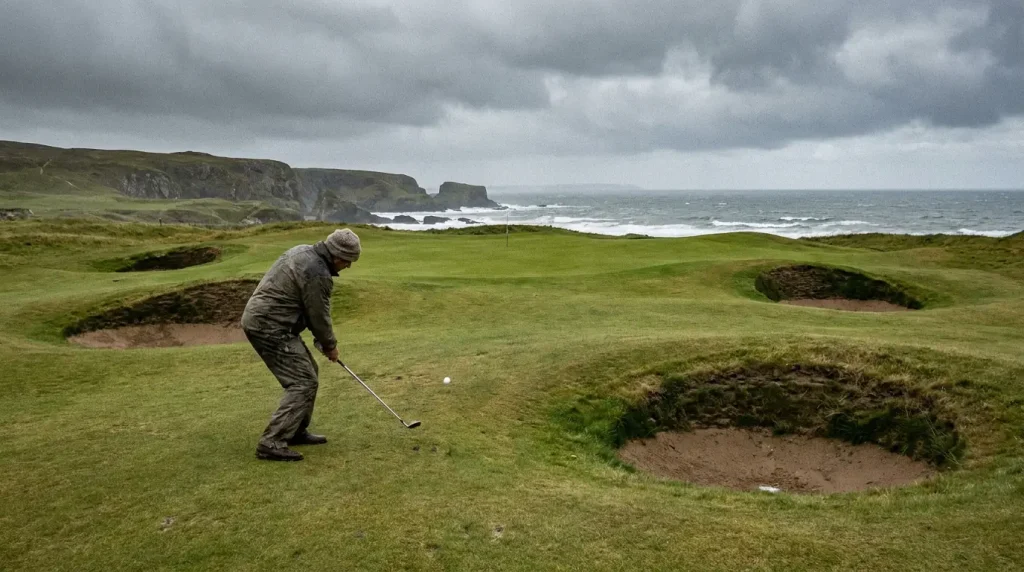
On a parkland course, the ball lands and largely stops. On a links course, the ball lands and rolls — sometimes 30, 40 or 50 yards depending on firmness and slope. That run-out changes the value of every club in the bag. Distance control through the air becomes less important than trajectory control: the ability to flight the ball low, land it short of the target and use the ground to carry it the rest of the way. Players who hit towering iron shots with heavy spin — the kind that look spectacular on television at Augusta — often struggle on links because their ball fights the wind rather than working with it.
Scrambling is the second critical variable. Links greens are surrounded by deep pot bunkers, humps, hollows and run-off areas that create recovery situations far more varied than the standard greenside bunker shot or chip from manicured rough. A player who misses greens on links needs creativity — the ability to play bump-and-run shots from bare lies, negotiate bunkers with vertical faces, and putt from 20 yards off the green across undulating surfaces. The strokes gained: around-the-green metric captures some of this, but not all. My Open model weights this category 30% higher than I would for any other major.
Wind tolerance is the third filter and the hardest to quantify. Some players simply perform better in wind than others, and the reasons aren’t always visible in their technique. It’s partly ball flight (lower is better), partly temperament (patience in difficult conditions rather than forcing aggressive lines) and partly experience. Players who grew up on links courses in the UK and Ireland have an ingrained comfort with wind and weather that no amount of PGA Tour success can replicate. My model includes a “links heritage” flag that’s admittedly crude but has improved Open predictions over three seasons of use.
Betting Trends from Recent Open Championships
The PGA Tour recorded a 20% increase in golf betting handle in 2025, and The Open contributed a disproportionate share of that growth relative to its single-event status. It’s the biggest annual golf betting event in the UK, full stop. That concentration of volume creates specific market patterns worth understanding.
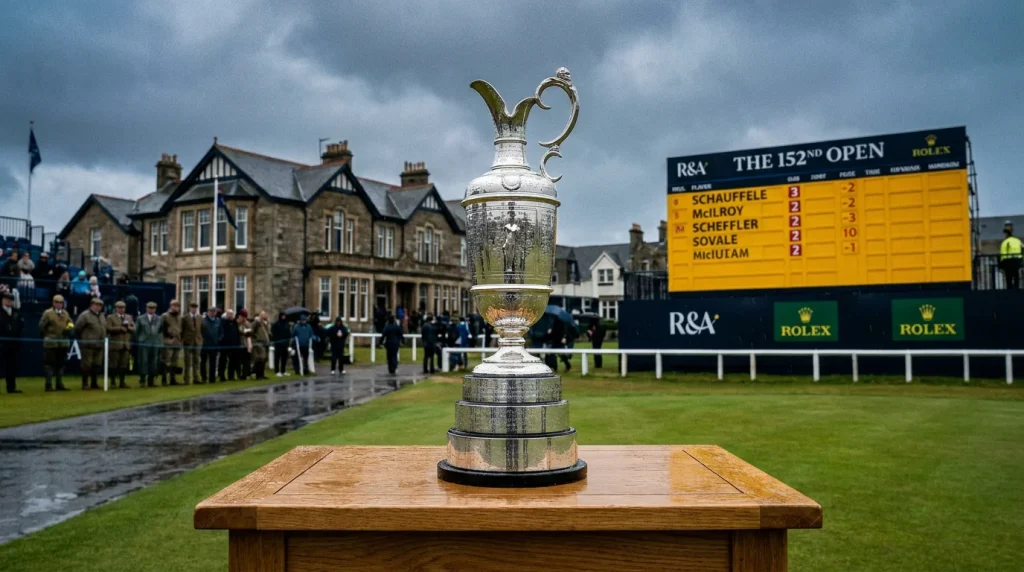
Favourites perform worse at The Open than at any other major. Over the past decade, the pre-tournament favourite has won The Open once. That’s not a fluke — it’s a structural reflection of what links golf does to predictability. The same wind that reshapes shot values also reshapes expected outcomes. A calm first two days followed by a Saturday gale can move the cut line by five strokes from one year to the next at the same venue. That environmental variance suppresses the conversion rate of pre-tournament probability into actual results.
Mid-range prices — 25/1 to 66/1 — have been the most productive band for Open Championship betting in my tracking data. These are players good enough to contend in any conditions but not prominent enough to attract the full weight of recreational money. The key is identifying which of these mid-tier players have the specific links skill set rather than simply being “good golfers” whose odds happen to fall in that range. A 40/1 shot with links pedigree, strong scrambling numbers and documented wind performance is a categorically different proposition from a 40/1 shot who just happens to be outside the top 20 in the world rankings.
Each-way value at The Open tends to be stronger than at the other majors because of the field size and the variance inherent in links conditions. With 156 players and place terms typically covering the top 6 or 8 at each-way odds, the combination of a deep field and high-variance conditions means more unexpected names reach the place positions. I’ve had each-way place returns at The Open that paid for an entire month’s betting allocation.

Open-Specific Angles: Weather, Draw and Qualifying Entrants
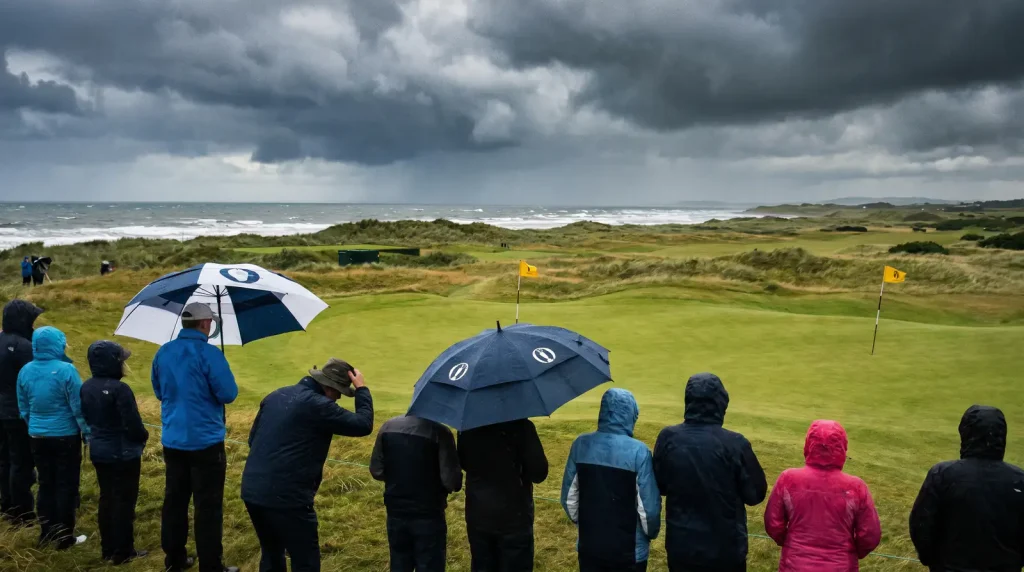
The AM/PM draw split matters more at The Open than at any other event on the professional calendar. Links courses change character between morning and afternoon. If the wind picks up after lunch — which is the prevailing pattern on the British coast — the afternoon wave faces a significantly harder test than the morning wave. Over a 36-hole cut, that asymmetry can be worth two to three strokes, which is the difference between making the weekend and going home.
I check the weather forecast obsessively during Open week. Not the five-day summary — the hourly wind speed and direction projections for each day. A player in the favourable half of the draw (morning on a calm day, or afternoon if the wind dies late) carries a built-in advantage that has nothing to do with skill. Some years the draw effect is minimal; in others, it’s the single biggest predictor of who makes the cut. My approach is to wait for the draw before finalising any Open selections, even if it means taking slightly shorter odds than were available earlier in the week.
Qualifying entrants add a layer that doesn’t exist at the other majors in the same way. Players who come through Final Qualifying — a 36-hole shootout held at courses near the Open venue in the week before the championship — carry both momentum and fatigue. They’ve just played 36 pressure-filled holes and earned their place on merit. Some of these qualifiers have produced remarkable Open results, but the analytical challenge is that their recent form is limited to lower-level tour events and qualifying scores that don’t translate easily into predictions for the championship itself.
Outright markets open months before The Open, and early prices often carry the best value — particularly for mid-tier players whose odds shorten as the championship approaches and previews raise their profile. The trade-off is that early bets carry withdrawal risk: if your selection pulls out through injury before the tournament, most bookmakers offer a rule-4 deduction rather than a void bet. I typically split my Open allocation between an early portfolio placed four to six weeks out and a final card adjusted after the draw is published.

Open Championship Betting: Common Questions
Why is The Open considered the hardest major to bet on?
Links golf introduces environmental variables — wind, rain, ground firmness, the AM/PM draw split — that suppress the predictive value of standard statistical models. Favourites win The Open less frequently than any other major because links conditions amplify variance. The skill set required (low ball flight, scrambling creativity, wind tolerance) doesn"t map cleanly onto the metrics that predict success at Augusta, Valhalla or US Open venues.
How does the links rota system affect Open Championship odds?
The Open rotates between a set of links courses across England, Scotland and Northern Ireland. Each venue has a distinct character: some favour length (Carnoustie, Royal Liverpool), others reward shot-making and creativity (Royal Troon, St Andrews). When the rota venue is announced, odds adjust to reflect which players suit that specific course. A player who thrives at St Andrews may be poorly matched to Carnoustie, and pre-tournament prices reflect that venue-specific analysis.
Articles
Created by the "Golf Betting Tips" editorial team.
