
Weather Impact on Golf Betting: Wind, Rain and the AM/PM Draw Advantage
 Available in US

At the 2022 Players Championship, the Thursday afternoon wave played in winds gusting to 40 mph while the morning starters had completed their rounds in relative calm. The scoring differential between waves was over three strokes. Every serious outright contender that week came from the morning draw, and the leaderboard after round one looked nothing like the pre-tournament market. I had three FRL bets on morning-wave players and all three hit the top 5 after 18 holes. It wasn’t analytical genius — it was weather awareness, and it’s the single most underpriced variable in golf betting.
Rounds played across England hit an all-time high in 2025, up 14% year-on-year, and that surge in participation has brought more weather-aware golfers into the betting market. Yet the bookmaker pricing models still react slowly to weather shifts, particularly at mid-tier events where pricing resources are stretched. If you can build a reliable weather-checking routine into your pre-bet process, you’ll find edges that pure form analysis never reveals.
How Wind Speed and Direction Reshape a Leaderboard
Wind is the most impactful weather variable in golf, and its effects are non-linear. A 10 mph breeze has a marginal impact on scoring — perhaps half a stroke over 18 holes compared to calm conditions. But a 20 mph wind doubles or triples that impact, and at 30 mph the course becomes a completely different test. The relationship between wind speed and scoring penalty follows an exponential curve, not a straight line, which means the jump from “breezy” to “windy” creates more scoring disruption than the jump from “calm” to “breezy.”
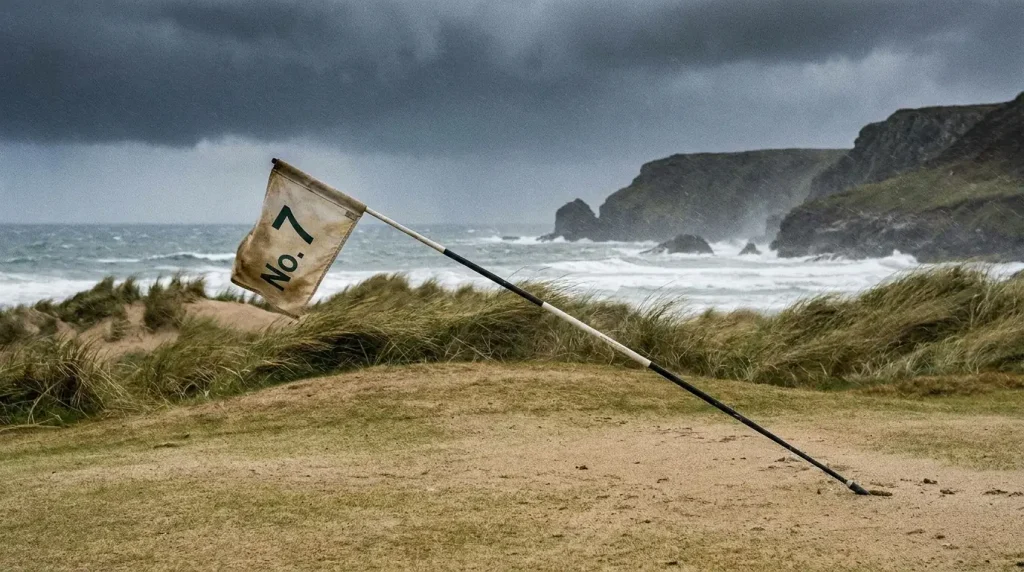
Direction matters as much as speed. A prevailing wind that blows along the layout of most holes — helping on some, hurting on others — produces relatively manageable conditions because players can plan for the changes. A crosswind that cuts across fairways on the tightest holes creates chaos, turning accurate drivers into average ones and making approach shots into guessing games. I check not just the wind speed forecast but the direction relative to the course layout, paying particular attention to the hardest holes. A 25 mph crosswind on a narrow par-4 that runs east-to-west will produce more bogeys than the same wind blowing directly into players’ faces on a wide par-5.
England Golf recorded 11.83 million scores submitted through the World Handicap System in 2025 — a 16% jump on the previous year. That volume of scoring data, combined with weather records, gives us an increasingly rich dataset for modelling the relationship between conditions and performance at UK courses specifically.
The AM/PM Draw Split and Its Effect on Scoring
Every stroke-play tournament that uses a two-tee start (which is most of them) splits the field into morning and afternoon waves for the first two rounds. The draw alternates on day two: Thursday morning starters play Friday afternoon, and vice versa. This creates a structural element that affects scoring in ways most punters underestimate.
The scoring advantage of the favourable draw wave — typically the wave that plays in calmer, softer conditions — ranges from 1.5 to 4 strokes over 36 holes, depending on how dramatically conditions change through the day. At links courses during summer, afternoon winds frequently pick up as the sea breeze develops, punishing the late wave. At desert courses in winter, morning frost delays can push tee times later, and the afternoon wave might face setting-sun glare on west-facing greens. Each scenario creates a measurable advantage for one wave, and that advantage compounds over two rounds into a meaningful leaderboard effect.
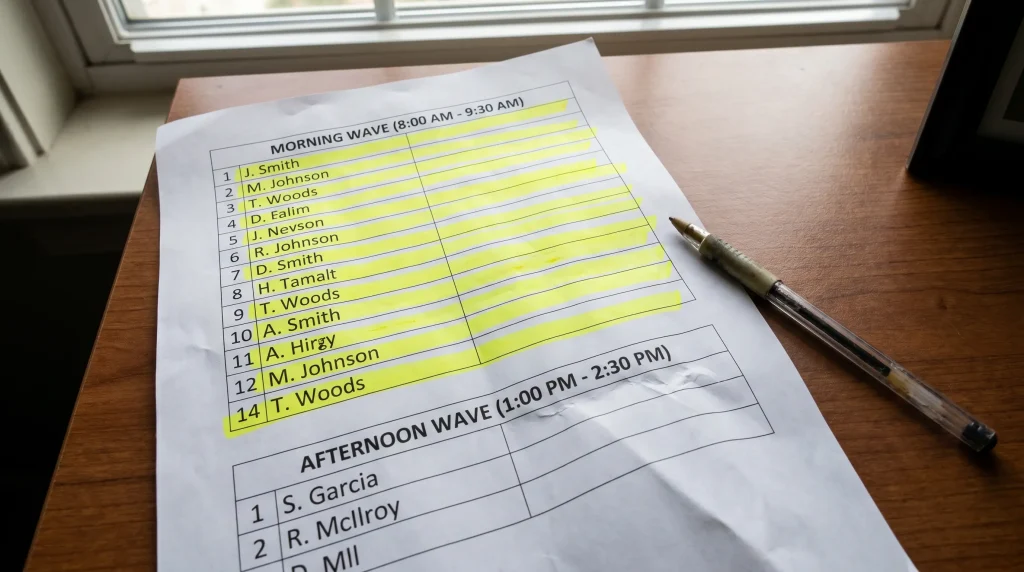
My process for assessing the draw is straightforward. On Wednesday evening, once tee times are published and the weather forecast has stabilised, I categorise the draw as strongly favouring AM, moderately favouring AM, neutral, moderately favouring PM, or strongly favouring PM. For the “strongly favours” categories, I adjust my player probability estimates by 15-20% upward for the favoured wave and downward for the disadvantaged wave. That adjustment frequently changes which players represent value and which don’t. A player I’d skip at 25/1 in the unfavoured wave might become a clear bet at 30/1 in the favoured wave — same player, same form, different environmental context.
The detail that catches most punters: the draw advantage isn’t just about which wave plays first. It’s about which wave plays the course when specific conditions peak. At first round leader betting, this distinction is critical — the FRL market settles after 18 holes, so the wave that plays in benign conditions has a structural edge that overwhelms all other factors.
Rain-Softened vs Firm-and-Fast: Adjusting Your Card
Rain changes a golf course at the molecular level, and the betting implications are significant. A rain-softened course plays longer (the ball doesn’t roll as far), the greens hold approach shots more easily (rewarding aerial precision over bounce-and-run creativity), and the rough becomes grabbier (penalising wayward drives more severely). A firm-and-fast course does the opposite: it rewards distance off the tee, demands links-style creativity, and reduces the penalty for missing greens because the ball can be bumped and run onto the putting surface from a wider range of positions.

I maintain two versions of my course-fit profile for venues that experience significant condition variability: a “soft” version and a “firm” version. The two profiles can produce different shortlists because the skill demands shift. At a parkland course, the soft profile emphasises SG: approach and driving accuracy (the course is long and tight). The firm profile shifts weight toward driving distance and scrambling (the course plays shorter but the ball reacts unpredictably around the greens). Switching between profiles based on the week’s conditions adds 15-20 minutes to my Tuesday analysis but has caught several value plays that a static profile would have missed.
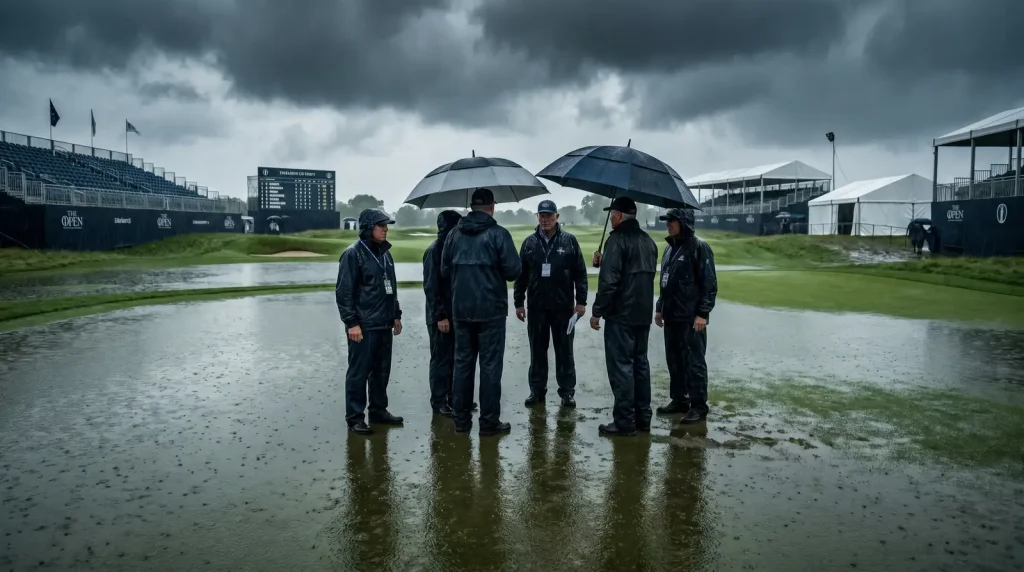
One practical note: heavy rain doesn’t just change the course — it can cause delays that compress the schedule. When a tournament loses hours to weather delays, the organisers may reduce it from 72 holes to 54, change the cut structure, or force players through 36 holes in a single day. Each of these scenarios reshapes the market. A 54-hole event increases variance dramatically (less regression to the mean), and a 36-hole day favours players with stamina and mental resilience. I always check the extended forecast for weather-delay risk and factor it into my staking — reducing unit size when delays are likely because the market becomes less predictable.
Free Weather Tools for Golf Bettors
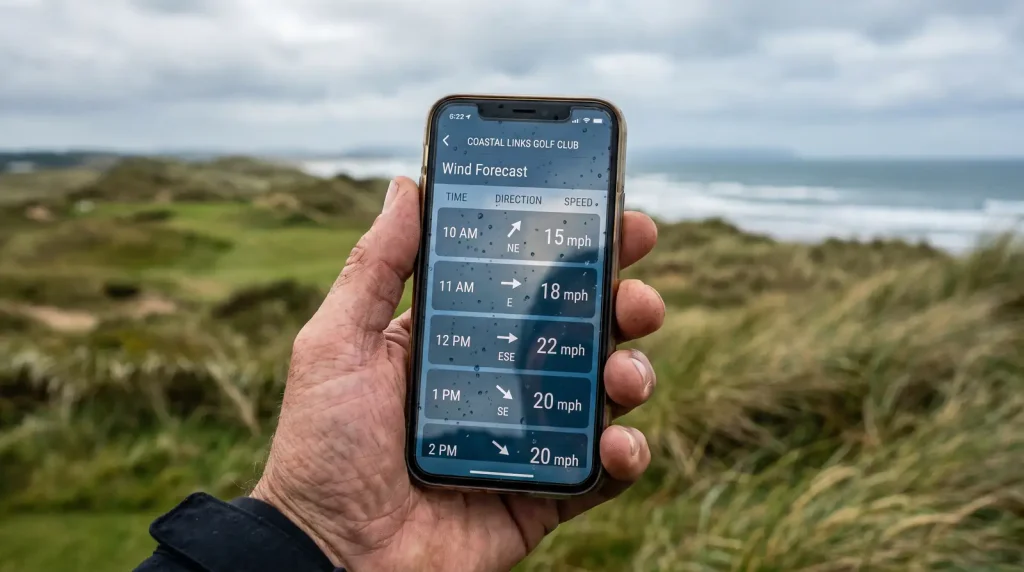
You don’t need paid meteorological services to integrate weather into your golf betting. The resources I use every week are all free. Hourly wind and precipitation forecasts available from national weather services cover every PGA Tour and DP World Tour venue. I cross-reference these with the published tee-time sheet to map which players face which conditions. For links courses, I check tide tables as well — tidal winds can shift dramatically between low and high tide, and some holes near the coastline are sheltered at low tide but exposed at high tide.
The single most valuable tool is the hourly wind direction overlay on a course map. Several golf analytics sites offer this, and matching wind direction to hole orientation takes ten minutes. The output is a hole-by-hole assessment of which holes will play significantly harder than usual and which will play easier. That granular view lets me identify players whose games suit the toughest conditions, not just players who handle wind “in general.”
Weather and Golf Betting: Common Questions
How do weather conditions affect golf betting outcomes?
Weather — particularly wind — reshapes scoring dramatically. A calm morning wave can average 3-4 strokes lower than an afternoon wave facing 25 mph gusts. Rain softens courses, making them play longer and rewarding aerial precision. Firm, dry conditions favour distance and creative short games. These effects change which players are best suited to the week"s conditions and can shift true probabilities by 15-20% relative to pre-tournament odds.
Where can I check tee-time draws before placing a golf bet?
Tee-time draws are published on the PGA Tour and DP World Tour official websites, typically on Tuesday or Wednesday before a tournament. Pair the draw with an hourly weather forecast for the tournament location to assess whether morning or afternoon starters face better conditions. Links courses in the UK require particular attention to afternoon sea-breeze patterns that can transform scoring from Thursday morning to Thursday afternoon.
Articles
Prepared by the Golf Betting Tips editorial staff.
