Ryder Cup Betting Guide: Team Format, Session Markets and Home-Course Dynamics
 Available in US
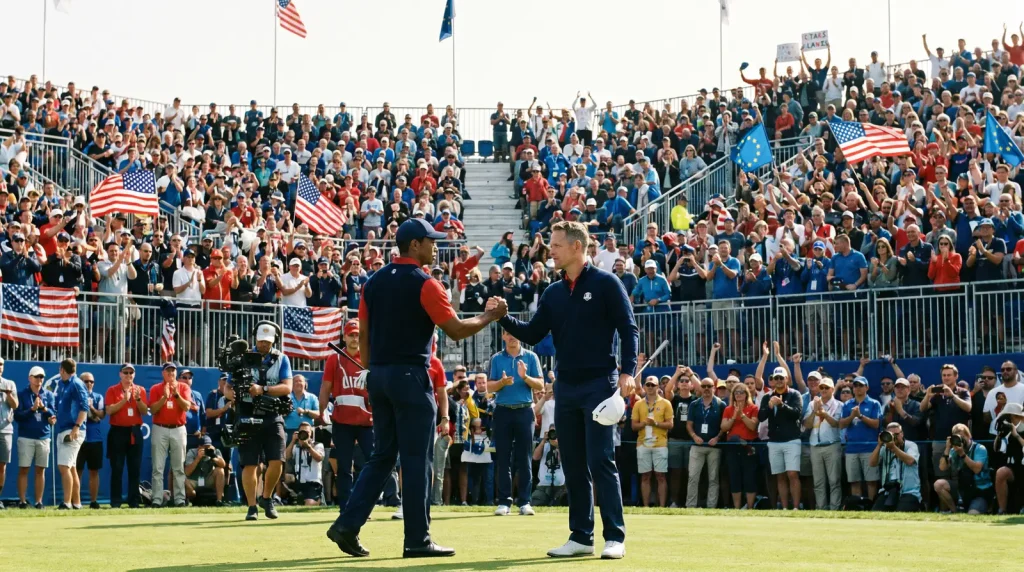
The Ryder Cup is the only golf event that has made me shout at a television. Not a fist pump, not a quiet nod of satisfaction when a bet lands — actual shouting. There’s something about match play between two teams of twelve that strips away the analytical distance I maintain for every other event on the calendar. The problem, from a betting perspective, is that emotion is the enemy of process. And the Ryder Cup is drenched in emotion — from the opening ceremony to the Sunday singles. Betting it well requires acknowledging that intoxicating atmosphere and then systematically removing it from your decision-making.
The event happens every two years, which means the sample size for any analytical framework is painfully small. Every data point I use carries twice the weight and twice the uncertainty of an annual tournament.
Ryder Cup Format: Foursomes, Fourballs and Sunday Singles
I once tried to explain the Ryder Cup format to a friend who bets on football, and his immediate response was: “So it’s three completely different sports played over three days?” He wasn’t far wrong. The three FedEx Cup Playoff tournaments in August 2025 saw betting handle rise 50% year-on-year, illustrating how format changes concentrate interest and money. The Ryder Cup compresses that effect even further — different formats within a single event, each requiring distinct analytical frameworks.

Friday and Saturday each feature two sessions. The morning session is foursomes (alternate shot): two players share one ball, taking turns hitting. This format rewards consistency, ball-striking precision and partnership chemistry above all else. A pair where both players hit fairways and greens is far more valuable than a pair containing one spectacular player and one inconsistent one. The afternoon session is fourballs (better ball): both players in each pair play their own ball, and the lower score on each hole counts for the team. This format favours aggression — if your partner has already secured par, you can attack the pin knowing a bogey costs nothing.
Sunday is twelve singles matches, one player against one, all happening simultaneously across the course. This is where individual form, temperament and match-play experience matter most. The captain’s ordering of the singles lineup — who goes out first, who anchors at twelve — is itself a strategic decision that bettors need to evaluate. Historically, the team that establishes early momentum in the singles sessions carries that energy through the afternoon, though the statistical evidence for a genuine “momentum effect” versus random clustering is thinner than the narrative suggests.
For bettors, the critical implication is that the Ryder Cup isn’t one market — it’s a nested set of markets operating on different analytical axes. The skills that predict foursomes success (accuracy, consistency, partnership history) are different from the skills that predict fourballs success (birdie-making, aggression, individual brilliance), and both are different from the skills that predict singles success (match-play mentality, individual form, pressure handling). A blanket “Team Europe to win” bet collapses all of these into a single position, which is why I prefer to build a Ryder Cup card from session-level and individual-match bets rather than the outright market alone.
Ryder Cup Betting Markets: Outright, Top Scorer and Session Winner
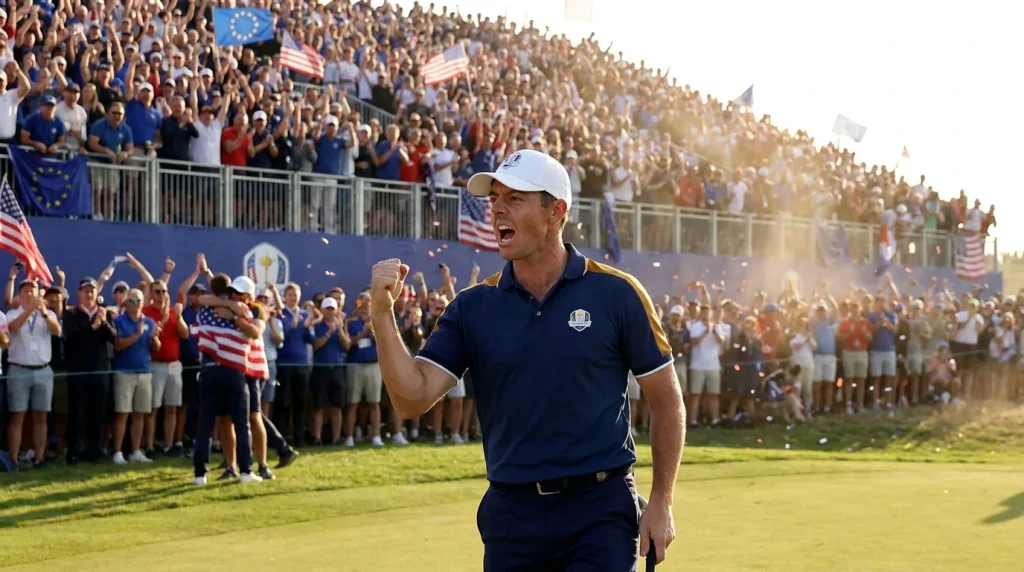
The PGA Tour recorded a 20% increase in golf betting handle in 2025, and Ryder Cup years typically amplify that trend further as the event draws casual viewers who don’t normally bet on golf. That surge of recreational money creates specific opportunities in the less visible markets.
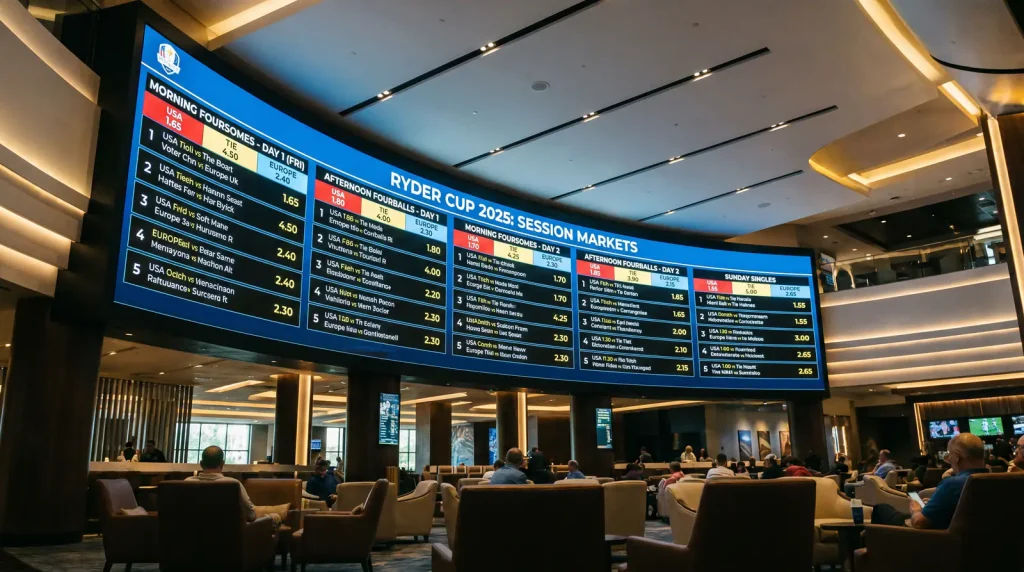
Outright winner — Team Europe or Team USA — is the headline market and the one that attracts the most volume. Pricing is straightforward: two outcomes (ignoring the rare tie) with odds that typically reflect a combination of world ranking aggregates, home-course advantage analysis and recent Ryder Cup form. The margin on the outright market is tight because it’s effectively a two-way market, which means the bookmaker’s edge is smaller than on a 156-player golf outright. That’s good for bettors, but it also means finding value is harder because the pricing is more efficient.
Top point scorer — which individual player accumulates the most points across all sessions — is where I find the most consistent value. This market requires understanding not just who the best players are, but who the captains will use most. A strong player who sits out one session scores fewer points than a solid player who plays all five sessions. Captain’s picks, injury concerns, partnership dynamics and tactical deployment all affect playing time, and most recreational bettors don’t factor any of this into their top-scorer selections.
Session winner markets — which team wins the Friday morning foursomes, the Saturday afternoon fourballs, and so on — offer granular positions that I find analytically cleaner than the outright. Each session is a self-contained event with a known format, a known pairing sheet (announced the evening before) and a relatively small number of matches (4 per session). The information-to-bet-size ratio is favourable: you’re analysing four pairings, not twenty-four players, and the key variables — partnership chemistry, format suitability, recent form — are more tractable than the full-tournament outright. For a deeper look at how prop-style markets work in golf, these session bets follow similar analytical principles.
Home Course Advantage and What the Data Shows
The narrative around Ryder Cup home advantage is overwhelming. European crowds roaring for European players. American crowds willing their team forward. The energy is real — I’ve felt it through a television screen. But the betting question isn’t whether home advantage exists in the emotional sense. It’s whether it exists in the statistical sense, and whether the market already prices it correctly.
The home team has won the Ryder Cup in the majority of recent editions, but “majority” in a biennial event with a small sample is a fragile foundation for betting. Since 2000, the home team has won roughly 70% of the time. That sounds convincing until you consider that 70% across twelve or so editions is a sample of about eight wins — a number that could shift significantly with two or three results going the other way. The market is aware of home advantage; the outright odds already reflect it. The question is whether they reflect it accurately or whether they over- or under-correct.
My approach is to decompose home advantage into its components rather than treating it as a single number. Course setup is the most tangible element: the home team’s federation controls pin positions, rough height, fairway width and green speed. At the 2018 Ryder Cup in Paris, the European team’s course setup visibly favoured players who hit the ball shorter and straighter. At Whistling Straits in 2021, the setup favoured American-style power and length. These decisions are made months in advance and are partially visible in practice-round reporting — if you’re paying attention.
Crowd energy is the least quantifiable component but arguably the most overpriced in the market. Crowds are loud for both sides; the idea that European crowds uniquely rattle American players (or vice versa) assumes a level of psychological fragility in professional golfers that doesn’t hold up under scrutiny. Most of these players compete in hostile atmospheres regularly — try making a putt with 50,000 fans screaming at a major. I discount crowd advantage almost entirely in my Ryder Cup analysis and focus instead on course setup, captain strategy and session-specific form.
Ryder Cup Betting: Common Questions
Can I bet on individual Ryder Cup sessions?
Yes. Most UK bookmakers offer session winner markets for each of the five sessions (Friday AM foursomes, Friday PM fourballs, Saturday AM foursomes, Saturday PM fourballs, Sunday singles). These session markets let you take positions on specific format-team combinations rather than committing to the overall outright result. Pairings are announced the evening before each session, giving you time to analyse matchups.
How does the team format change betting strategy compared to stroke play?
The Ryder Cup uses match play across three formats (foursomes, fourballs, singles), each requiring different skill profiles. Foursomes reward consistency and partnership chemistry. Fourballs favour aggressive birdie-makers. Singles depend on individual form and match-play temperament. A strong stroke-play performer may be poorly suited to foursomes if their game relies on recovery shots rather than fairway accuracy. Effective Ryder Cup betting analyses each format separately rather than relying on world ranking or recent stroke-play results alone.
Articles
Prepared by the Golf Betting Tips editorial staff.
