
Golf Cut Line Betting Strategy: Predicting the Friday Cut and Profiting from It
 Available in US
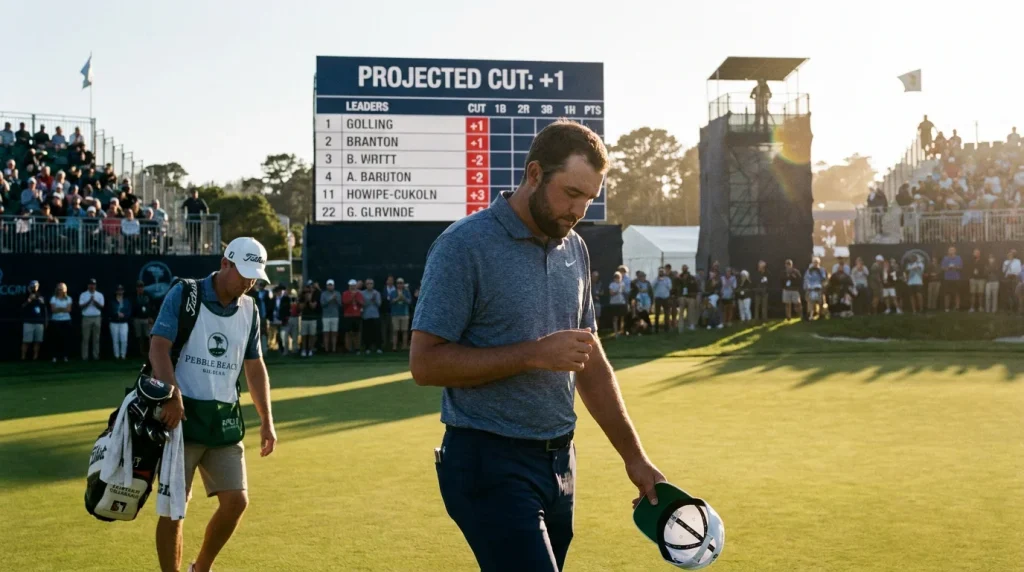
The cut line is golf’s great binary divider. Make it, and you play the weekend with a chance at prize money. Miss it, and you pack your bags Friday evening with nothing to show for two days of competition. I started paying serious attention to cut-line markets three years ago after noticing something in my tracking data: my ability to predict whether a mid-field player would make the cut was significantly more accurate than my ability to predict their finishing position. That asymmetry pointed to a market where my edge was being underused.
The PGA Tour recorded a 20% increase in golf betting handle in 2025, and make/miss cut markets have grown alongside it. These are binary bets — yes or no, make or miss — with pricing that reflects each player’s expected scoring relative to the projected cut line. The simplicity of the proposition masks the analytical depth required to price it accurately, and that depth is where informed punters find value.
How Golf Cut Lines Work Across Tours
On the PGA Tour, the standard cut rule eliminates the bottom half of the field after 36 holes. At a 156-player event, the top 65 players and ties advance to the weekend. At a signature event with 70-80 players, the cut typically takes the top 50 and ties. The exact cut line — the score that separates survivors from the eliminated — varies each week based on course difficulty, weather, and field strength.
The DP World Tour uses a similar structure but has experimented with different cut formats in recent years, including secondary cuts after 54 holes at certain events. The key point for bettors is that the cut line is not a fixed number. It moves depending on conditions, and predicting where it falls is the first step in valuing make/miss cut bets. At a scoring-friendly course in calm weather, the cut might land at 2-under par. At a major setup with wind, it might land at 4-over. That variance is significant because it changes which players are at risk.
Stats That Forecast Made-Cut Probability
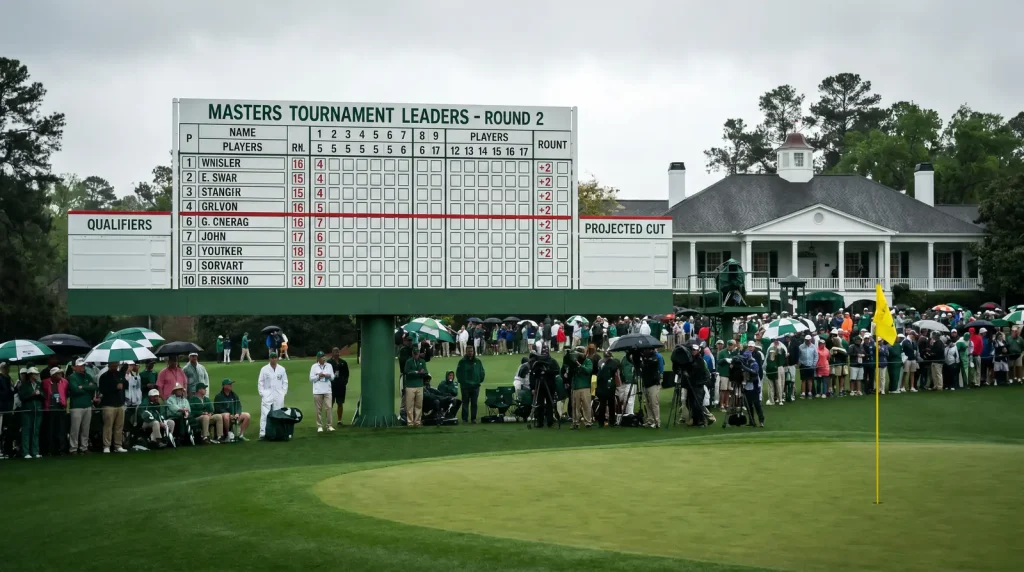
My cut-line model uses three primary inputs. The first is each player’s scoring average relative to the field over their last 24 rounds. A player who consistently scores 1.5 strokes better than the field average has a high baseline made-cut probability regardless of the specific conditions. A player whose scoring hovers near the field average is a borderline case whose outcome depends heavily on the week’s conditions.

The FedEx Cup Playoffs saw handle rise 50% year-on-year in 2025, and the playoff events provide useful calibration data for cut-line models because the compressed fields and elevated competition sharpen the line between making and missing the cut. The second input is course-specific scoring variance. Some courses produce tight leaderboards where the cut falls close to the field average; others produce spread-out scoring where the cut drifts well below average. I maintain a database of historical cut lines for every regular PGA Tour venue, adjusted for field strength.
The third input is recent form trajectory. A player whose SG: tee-to-green has declined over their last three events is more likely to miss the cut than their season-long average suggests, because the decline signals a potential form dip that the season-long number hasn’t fully captured. I weight the 12-round SG average twice as heavily as the 24-round average in my cut-line model to capture these short-term shifts.
For a complementary approach to reading current form, my guide to golf form analysis covers form windows and regression effects in detail.

Make/Miss Cut Betting Markets and Pricing
Make/miss cut bets are priced as binary propositions. A player at 1/4 to make the cut has an implied probability of 80%. A player at 6/4 to make the cut implies roughly 40%. The bookmaker’s overround on these markets typically runs at 8-12%, which is lower than the 20-40% overround on outright markets but still represents a meaningful house edge that your analytical advantage needs to overcome.

Where I find the most consistent value is in the middle band — players priced between even money and 6/4 to make the cut. These are the borderline cases where small differences in analytical accuracy produce the largest pricing gaps. A player I assess at 65% made-cut probability, priced at 6/4 (40% implied), represents a massive edge. But a player I assess at 82%, priced at 1/4 (80% implied), offers only a sliver of value that barely covers the overround. The middle band is where the bookmaker’s model and mine disagree most frequently, and disagreement is where the money lives.
Timing affects cut-line pricing too. Early in the week, make/miss cut odds are derived primarily from a player’s outright price and their general reputation. By Wednesday, as weather forecasts firm up and practice-round reports circulate, the pricing adjusts — sometimes significantly. I place most of my cut-line bets on Tuesday when the initial prices are still anchored to the player’s name rather than the week’s conditions. A player returning from a three-week break, for example, might be priced on their season-long average while my model factors in the form dip that typically follows an extended rest. That timing gap is where Tuesday prices offer more value than Wednesday prices for the same player in the same market.
One tactical note: make/miss cut bets pair naturally with each-way outright bets as a portfolio. If you’re backing a player each-way at 50/1, you already believe they’ll contend — and contention requires making the cut. Adding a standalone make-cut bet on the same player at a separate bookmaker concentrates your exposure on the outcome you’re most confident about (making the weekend) rather than the outcome with the lowest probability (winning outright). The combined portfolio delivers returns in more scenarios than either bet alone.
One tactical note: I often pair make/miss cut bets with small each-way outright positions. If I back a player each-way at 50/1 and separately bet them to make the cut at 6/4, the cut bet provides a return even if they finish 40th — well outside the each-way places but comfortably inside the cut line. The cut bet effectively hedges the worst outcome of the each-way bet (making the cut but finishing outside the places) by providing a return pathway that the each-way structure doesn’t cover.

Cut Line Betting: Common Questions
What role does the cut line play in golf betting strategy?
The cut line is the score threshold that determines which players continue to the weekend rounds. In betting, the cut line affects multiple markets: make/miss cut bets settle directly on it, each-way and outright bets lose if a player misses it, and in-play odds shift as players move relative to the projected line. Understanding cut-line dynamics helps you assess which players are at risk and where pricing inefficiencies exist in binary cut-line markets.
Is a make the cut bet good value for outsiders?
It can be. Long-shot players priced at 80/1+ for the outright are often priced at generous odds for the cut precisely because they are outsiders. But many of these players are outsiders for good reason — their scoring averages sit near the field average, making them genuine 50/50 propositions for the cut. The value depends on whether your model identifies a specific player whose consistency is underpriced by the market, not on the blanket assumption that outsiders are good cut-line bets.
Articles
Published by the Golf Betting Tips team.
