
Golf In-Play Betting Strategy: Timing, Markets and Signals That Move Live Odds
 Available in US
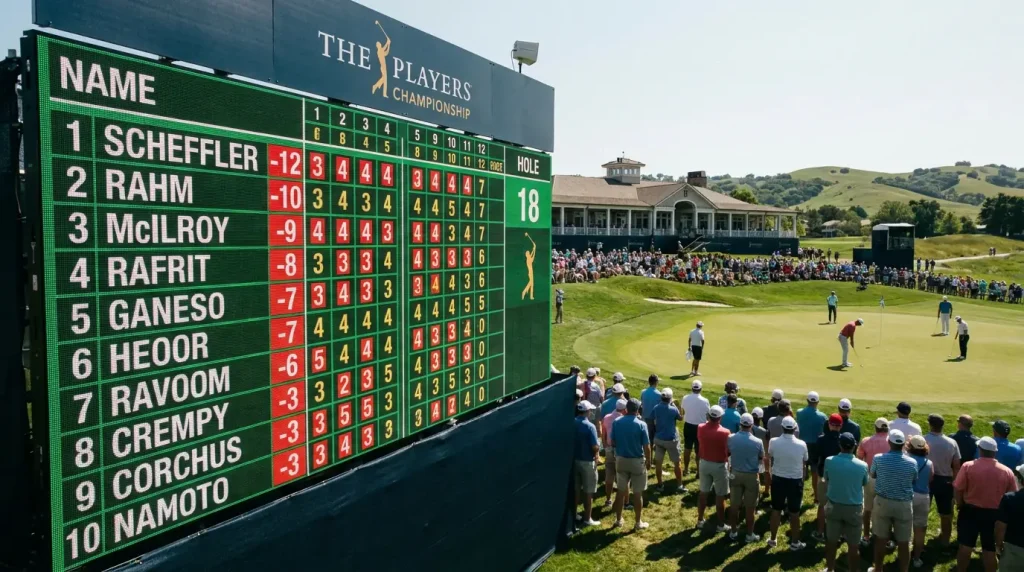
The moment that changed how I think about live golf betting happened at the 2023 Waste Management Phoenix Open. I was watching a mid-pack player step onto the 16th tee, three shots off the lead, priced at 40/1 in-play. He birdied 16, eagled the par-5 17th, and birdied 18 to take the clubhouse lead. By the time the leaders reached the back nine, his price had collapsed to 3/1. I’d placed my bet at 40/1 after his birdie on 16 — not because I predicted the eagle, but because I’d calculated that his strokes gained approach numbers on that stretch of holes gave him a birdie-or-better probability far higher than his live price implied. In-play golf betting rewards the punter who can process data faster than the market adjusts.
The PGA Tour LIVE Betcast expanded from 50 hours across 6 tournaments in 2025 to over 400 hours across 12 tournaments in 2026 — a 700% increase. That explosion in coverage has transformed live golf betting from a niche activity into a genuine market, with shot-level data streaming to screens within seconds of a ball landing. For punters who understand the rhythms of a golf tournament, the opportunities are better than they’ve ever been.
In-Play Golf Markets: What You Can Bet on Mid-Round
When I started betting golf in-play five years ago, the only live option was tournament winner at updated odds. Today, the market menu during featured coverage includes outright winner, top-5 finish, top-10, round leader, next player to birdie, hole-by-hole scoring, and even shot-specific props during Betcast windows. Sportradar’s golf data feeds power most UK bookmaker platforms, delivering scoring updates within 30-90 seconds of a putt dropping.
The breadth matters because different live data feeds suit different analytical approaches. If your edge is in reading momentum shifts — a player who birdies three of four holes and is heating up — tournament winner and top-finish markets are your playground. If your edge is in hole-specific analysis — knowing that the par-5 13th at Augusta yields birdies 45% of the time for players with elite SG: approach numbers — micro-prop markets offer a more targeted opportunity.
I focus my in-play activity on two markets: tournament winner when a player’s live price doesn’t reflect their scoring trajectory, and round scoring when I identify a mismatch between a player’s current pace and the difficulty of the remaining holes. Everything else — next birdie props, hole-by-hole bets — carries margins too wide for my edge to overcome consistently.
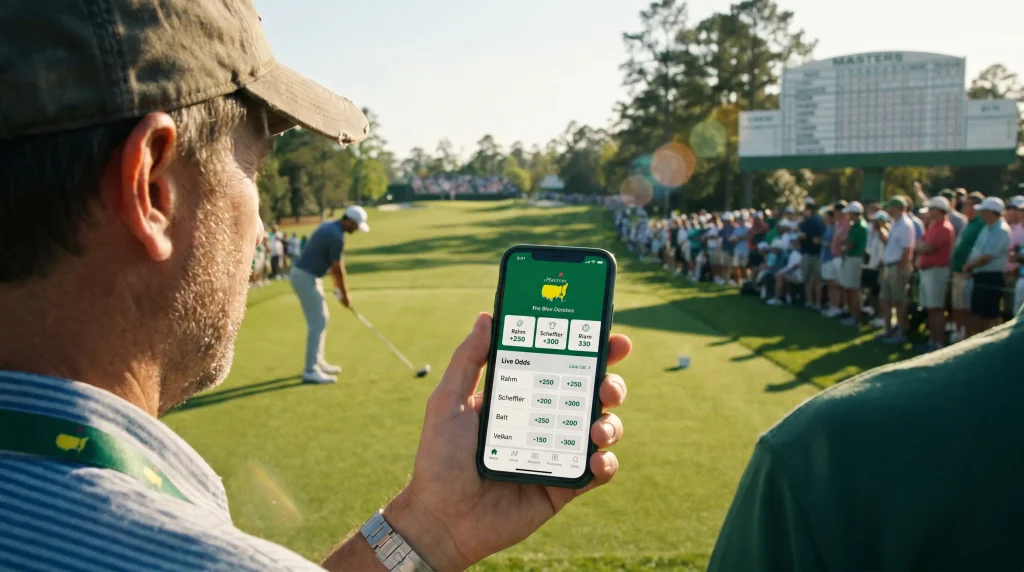
When to Bet In-Play: Key Timing Windows
Not every moment during a golf round offers equal opportunity. Through three seasons of detailed in-play tracking, I’ve identified three timing windows where pricing inefficiencies cluster.
The first is the early-morning window on Thursday and Friday, when the first groups are on the course but featured TV coverage hasn’t started. Live odds during this window are updated more slowly because bookmakers are working from scoring data alone, without visual confirmation. A player who’s hitting the ball brilliantly but missing short putts will have a score that doesn’t reflect their ball-striking quality — and the odds will follow the score, not the underlying performance.
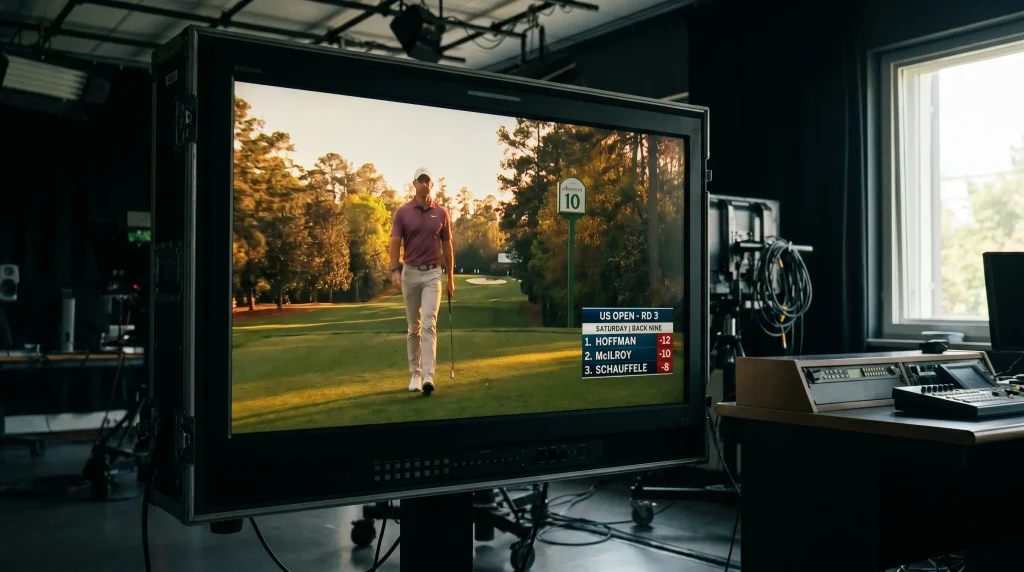
The second window is the back-nine stretch on Saturday afternoon, when the leaderboard compresses and multiple players are within striking distance. This is when overreaction creates value. A birdie from the leader at the 14th might shorten their price dramatically, but if the remaining holes are the hardest stretch on the course and the chasing pack is about to hit a birdie-friendly run, the leader’s price has overshot.
The third — and in my experience the most profitable — is Sunday morning before the final round begins. Saturday night provides a full leaderboard update, and the market has digested the third-round results. But I’ve noticed that Sunday morning prices tend to anchor too heavily on 54-hole position and not enough on the strokes gained data from the first three rounds. A player sitting 8th, four shots back, whose SG: approach numbers have been elite all week, is often underpriced for a top-5 finish relative to someone sitting 3rd whose scoring has been propped up by an unsustainable putting week.
Reading Live Scoring Signals: Birdies, Bogeys and Momentum
The PGA Tour’s Betcast coverage has given in-play bettors access to shot-level information that used to be available only to on-course observers. I use this data to identify two specific patterns that predict near-term scoring.
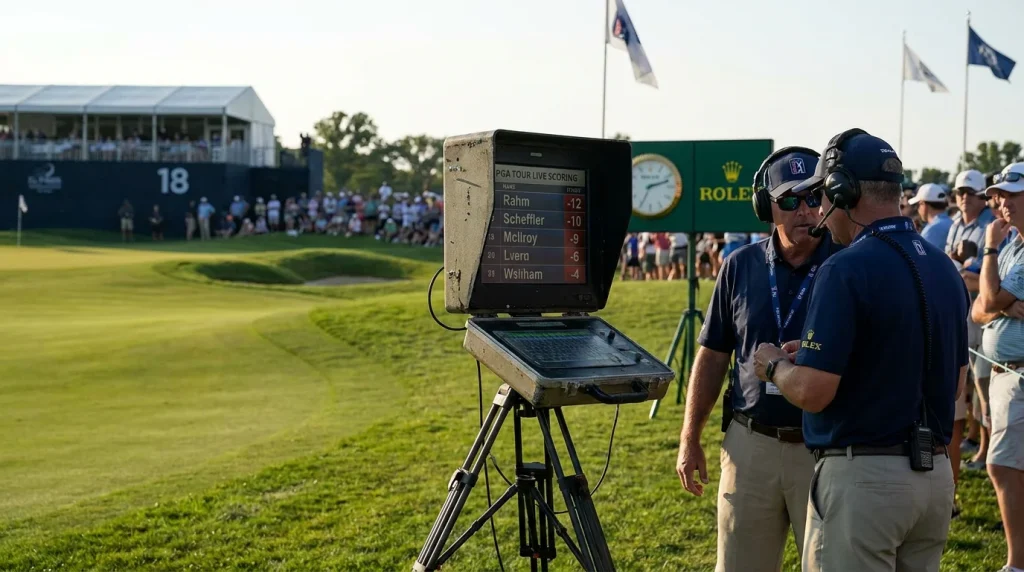
The first pattern is “approach lock-in” — when a player hits three or more approaches inside 15 feet over a four-hole stretch. Even if the putts haven’t dropped yet, a player creating that volume of birdie opportunities is likely to convert several over the next few holes. The live market prices based on actual birdies, not birdie opportunities, which means there’s a lag between performance quality and price adjustment. That lag is your window.
The second pattern is “bogey cascade” — when a player makes back-to-back bogeys and their price drifts dramatically. In my data, players who make consecutive bogeys in rounds 1-3 recover to their pre-bogey scoring pace within the next four holes roughly 65% of the time. The market treats consecutive bogeys as a signal of ongoing collapse, but the data suggests they’re usually isolated clusters rather than sustained meltdowns. Backing a player at a drifted price after two bogeys, with a plan to take profit if they birdie within the next three holes, has been one of my most consistent in-play edges.

Latency, Suspension and Risk Management
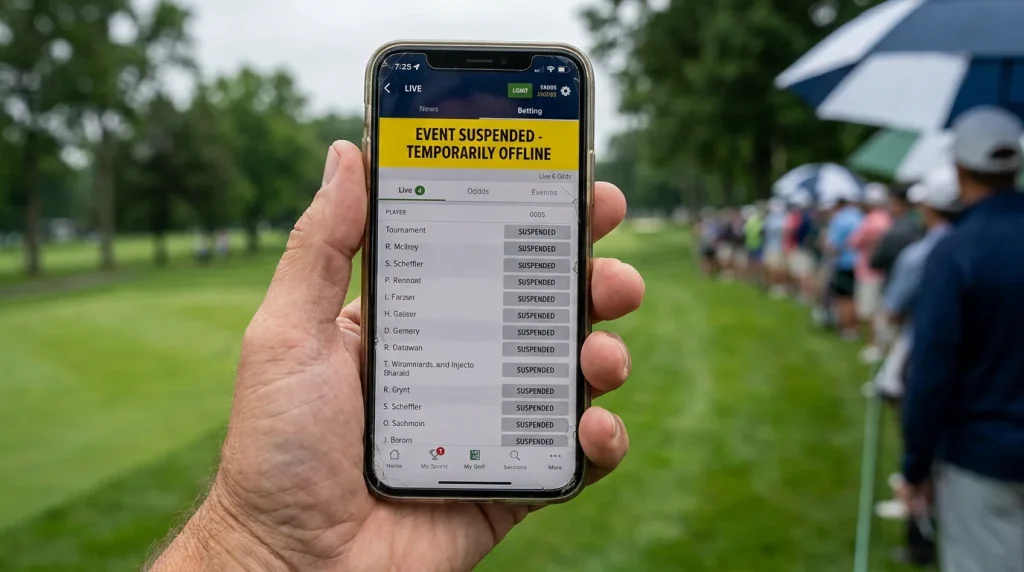
In-play golf betting carries risks that pre-tournament betting doesn’t. Latency — the delay between a real-world event and the odds update on your screen — can mean you’re betting on stale prices. Bookmakers suspend markets during scoring changes, and if you attempt to place a bet during a suspension, it may be rejected or queued at revised odds. I’ve had bets accepted at pre-birdie prices that were subsequently voided because the bookmaker determined the scoring information was available before my bet was placed.
My risk management rules for in-play are strict: never bet more than 0.5% of bankroll on a single in-play wager, accept that voided bets are part of the landscape, and never chase an in-play move I’ve missed. If the price has already adjusted by the time I’m ready to act, the opportunity is gone. Discipline in the live environment matters more than in pre-tournament betting because the emotional pull of watching events unfold in real time makes impulsive betting psychologically easier.
In-Play Golf Betting: Common Questions
Can you bet on golf in-play and how does it work?
Yes, most UK bookmakers offer live in-play betting on golf during tournament rounds. Odds update in near real-time based on scoring data from the course. You can bet on tournament winner, top-finish positions, round leader, and hole-by-hole markets during featured coverage. Bets are placed at the price available when the bookmaker accepts your wager, and markets may be suspended during scoring changes.
Which UK bookmakers offer the best live golf betting coverage?
Coverage varies by operator, but the bookmakers with the broadest in-play golf menus typically offer live odds on 20-30 players per round during PGA Tour featured coverage, including outright, top-finish and round-scoring markets. In-play coverage is generally more extensive for PGA Tour events than for DP World Tour or LIV Golf due to the underlying data infrastructure. Compare available markets during a live event rather than relying on promotional claims.
Articles
Created by the "Golf Betting Tips" editorial team.
