
Golf Futures Betting: Season-Long and Major-Winner Markets Before the Schedule Begins
 Available in US
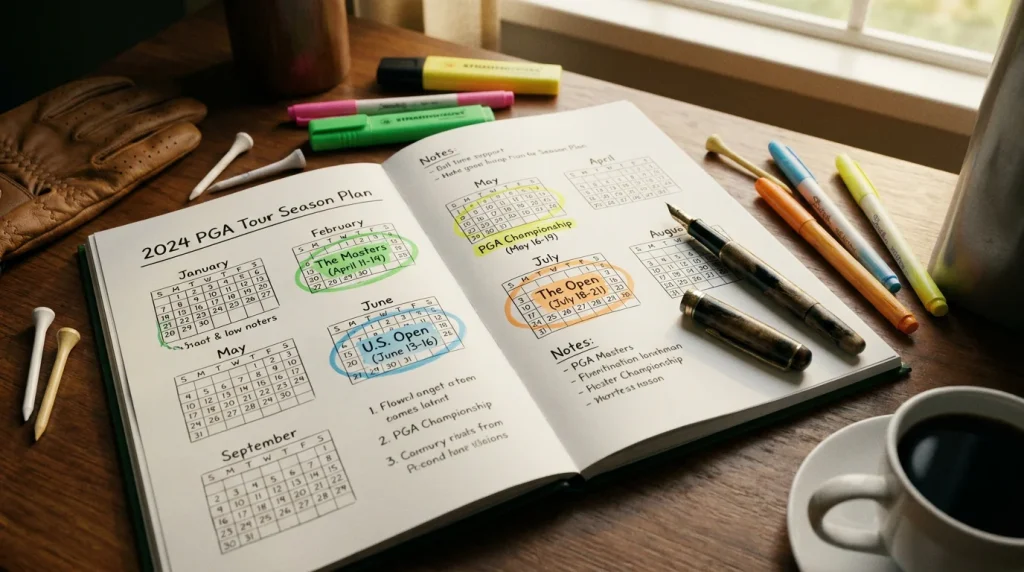
In December 2024, I placed a futures bet on a player to win the 2025 Open Championship at 80/1. Seven months later, he finished T3 at Royal Liverpool and the bet lost — but the process behind it was sound, and I’d do it again tomorrow. Futures betting in golf is a fundamentally different discipline from weekly tournament wagering. You’re locking capital into a position that won’t resolve for months, sometimes a full year, and the variables that determine whether you win include things no model can predict: injuries, equipment changes, personal circumstances that alter form in ways invisible to the data. That uncertainty is precisely what creates the value.
The PGA Tour recorded a 20% increase in golf betting handle in 2025, and a growing proportion of that handle now lands on futures markets as bookmakers expand their season-long offerings. Where once you could only bet on major winners and FedExCup champion, today’s menus include Rookie of the Year, Player of the Year, and season-long head-to-head matchups between named players. The market has matured, and the pricing has become more sophisticated — but so have the edges available to punters who do the work.
Types of Golf Futures: Major Winners, Tour Rankings and Award Bets
Golf futures fall into three broad categories, each with its own analytical demands and risk profile. Major winner markets — betting on who will win the Masters, Open Championship, US Open or PGA Championship — are the most popular and the most liquid. Season-long ranking markets, such as FedExCup winner or Race to Dubai champion, require a different evaluation framework because they reward consistency over 20-30 events rather than peak performance in a single week. Award bets — Rookie of the Year, most wins on tour — sit at the intersection and tend to carry wider margins because bookmakers price them with less granularity.
I focus 80% of my futures allocation on major winner markets because the data infrastructure is strongest there. Each major is played at a known venue (or a limited rota), which means I can build course-fit profiles months in advance. Augusta National’s statistical demands are well documented. The Open rota courses have years of ShotLink-equivalent data. That historical depth gives me a genuine analytical framework for estimating each player’s probability of winning, which is precisely what futures betting requires. For a breakdown of how each major differs strategically, my majors betting guide covers the course profiles and market angles in detail.
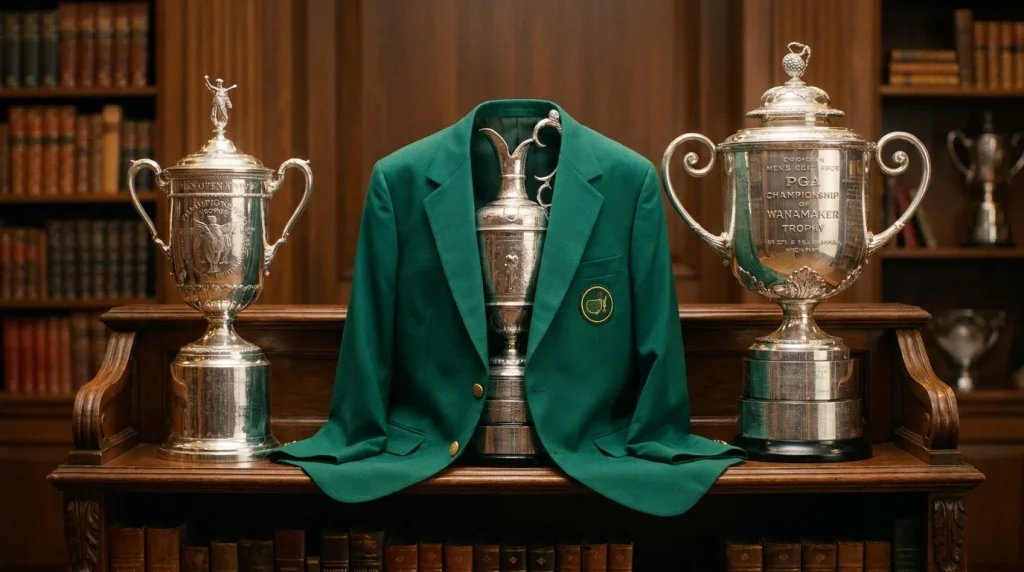
When to Place Golf Futures for Maximum Value
Timing is everything in futures, and the sweet spot is counterintuitive. The longest odds — and often the best value — appear immediately after the previous year’s event concludes. When a major champion is crowned, bookmakers post next year’s market within hours, and the initial pricing is typically softer than it will be at any point before the event begins. The global sports betting market is projected to reach $575 billion by 2035, and that growth trajectory means futures markets are becoming more efficient each year — but the early-post window remains the least efficient moment because bookmakers are balancing hundreds of prices simultaneously with minimal analytical input.
My approach is to place 50% of my futures allocation in that initial window, within the first week of the new market opening. The other 50% I hold in reserve for two specific triggers: a player whose form profile strengthens significantly during the season (capturing value before the market catches up), or a player whose odds drift following a poor result that I judge to be an outlier rather than a genuine form decline.
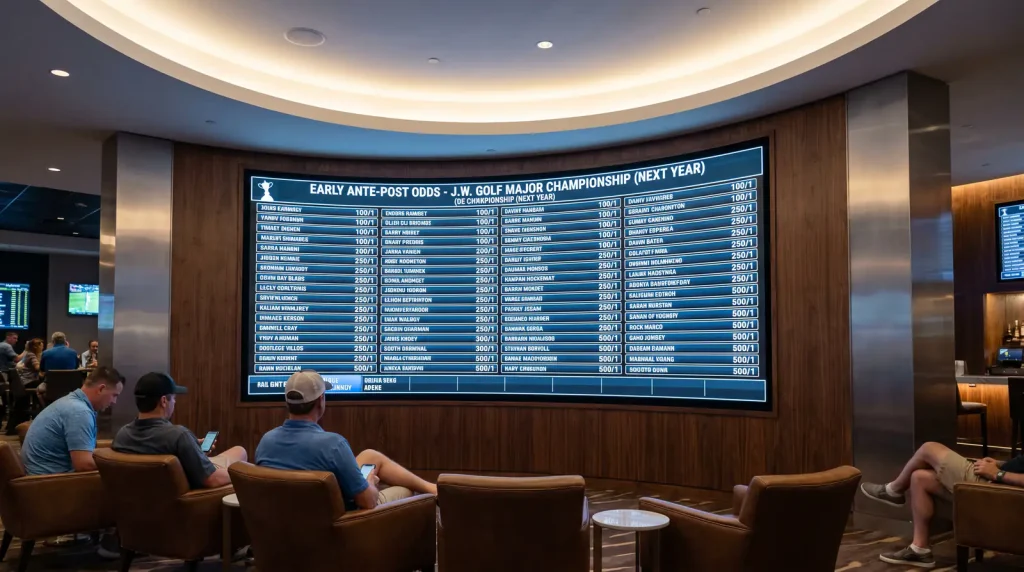
The risk of early futures is obvious: you’re betting months before the event, and anything can happen. But the reward — capturing odds that may halve or worse by tournament week — justifies the risk for players who meet my analytical criteria. A player I assess at 30/1 true probability, available at 80/1 in the early market, offers a 167% edge. That edge compresses as the event approaches and information flow narrows the gap between my assessment and the market’s.
Managing Locked Capital and Injury Risk in Futures
The biggest practical challenge of futures betting is capital management. A futures bet placed in January that resolves in July locks your stake for six months. If your bankroll is tight, that locked capital reduces your weekly firepower for regular tournament betting. Scott Warfield, the PGA Tour’s VP of Gaming, has described the Tour’s ambition to “grow the pie and get more people engaged around the sport,” and futures markets are a key part of that growth — but for the individual punter, engagement needs to be balanced against bankroll liquidity.

I cap my futures exposure at 5% of total bankroll at any given time. That means if I have a £2,000 bankroll, no more than £100 is locked in futures positions, spread across 4-6 bets. Each individual futures bet is small — typically 0.5-1% of bankroll — because the variance is enormous. You might place 20 major winner futures across a season and hit zero. The expected hit rate on well-selected 50/1-80/1 futures is roughly 2-4%, meaning you’d need several seasons of consistent betting before the results become statistically meaningful.
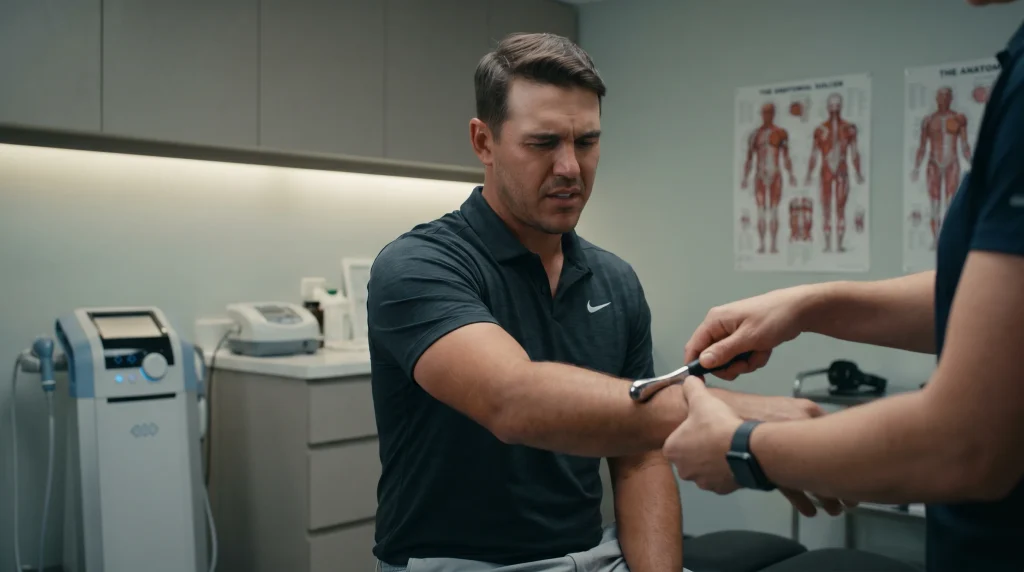
Injury risk is the wild card. A player you backed at 60/1 in January might suffer a wrist injury in March, miss two months and arrive at the major well short of peak form. There’s no protection against this — futures stakes are non-refundable in almost all cases. The only mitigation is diversification: spread your futures allocation across multiple players at different odds ranges rather than concentrating on one or two picks. If one selection gets injured, the others remain live, and the portfolio approach reduces the impact of any single loss.
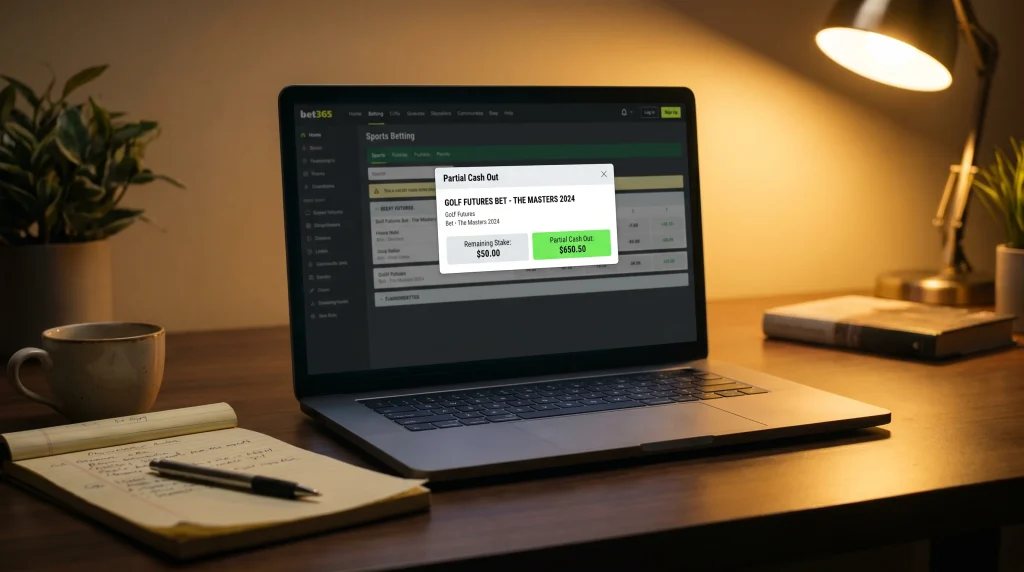
I also monitor my futures portfolio actively through the season, using cash-out opportunities when they arise. If a 60/1 Masters pick shortens to 25/1 by late March because they’ve been in excellent spring form, I sometimes cash out a portion of the position to lock in a partial profit and reduce my capital at risk. The remaining exposure still captures the full upside if they win, but the guaranteed return from the partial cash-out reduces the net cost of the original bet. It’s not a strategy I apply mechanically — it depends on the cash-out terms and whether the odds movement reflects genuine probability change or just public hype — but over three seasons, judicious partial cash-outs have improved my futures portfolio return by reducing the average capital locked per position.
Golf Futures Betting: Common Questions
What is the difference between futures and outright golf bets?
An outright bet is placed on a specific tournament in the near term, usually the same week or within days of the event. A futures bet is placed well in advance — weeks, months, or even a full year before the event — on outcomes such as major championship winners, season-long awards, or tour ranking positions. Futures typically offer longer odds because the uncertainty is greater, but your capital is locked until the bet resolves.
Can I cash out a golf futures bet early?
Most UK bookmakers offer a cash-out option on golf futures, though the available amount depends on how the player"s odds have moved since you placed the bet. If your player"s odds have shortened significantly, the cash-out value will reflect a portion of the potential profit. If their odds have drifted, the cash-out may be below your original stake. Cash-out terms vary by bookmaker and are not guaranteed to be available at all times.
Articles
Created by the "Golf Betting Tips" editorial team.
