
Golf Matchup Betting Tips: 2-Ball, 3-Ball and 72-Hole Head-to-Head Strategies
 Available in US
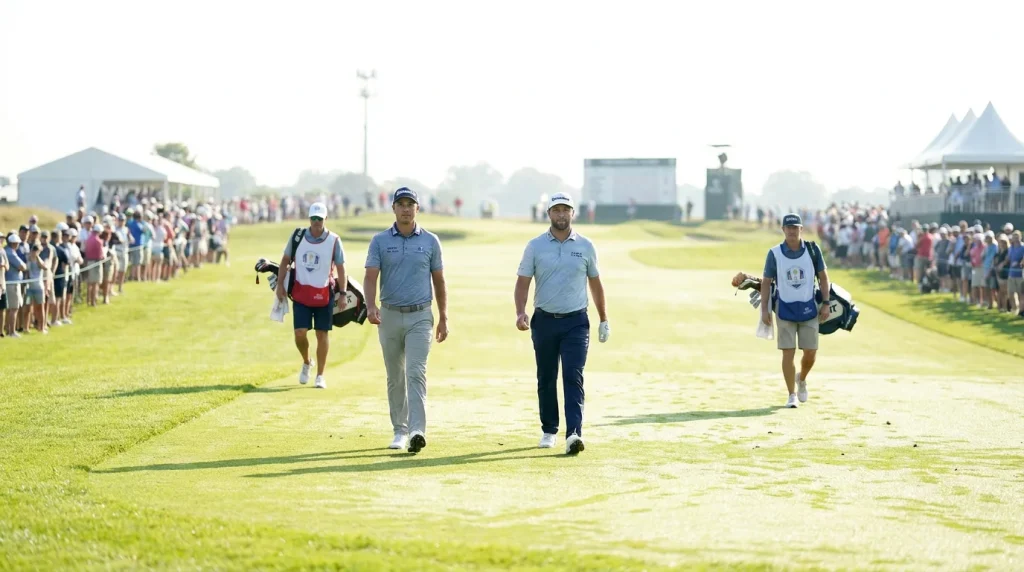
My best month in golf betting had nothing to do with picking a tournament winner. It was September 2023, and I went 11 for 16 on head-to-head matchups across three DP World Tour events. The total profit wasn’t as dramatic as a 66/1 outright screamer, but the consistency of it — winning nearly 70% of binary bets over three weeks — did more for my bankroll than any single long-shot result I’ve ever landed. Matchup betting is where I spend the most analytical time each week, and there’s a reason for that: when you strip a 156-player field down to two or three names, the noise disappears and the data starts speaking clearly.
The PGA Tour’s 20% year-on-year increase in betting handle has expanded matchup offerings significantly. Where bookmakers once posted a dozen head-to-heads per event, you’ll now find 40 or more pairings at signature events, plus round-by-round 3-balls drawn from the actual tee-time sheet. That expansion has created more opportunity, but it’s also created more traps for the punter who doesn’t understand the structural differences between matchup types.
2-Ball, 3-Ball and 72-Hole Matchups: How Each Works
Let me walk through the mechanics, because I’ve seen experienced bettors confuse these formats. A 2-ball (head-to-head) matchup pits two named players against each other, and you pick which one will post the lower score. This can cover a single round or the full 72-hole tournament. In a single-round 2-ball, the bet settles after 18 holes. In a 72-hole matchup, the bet runs across all four rounds, and the player with the lower cumulative score wins. If one player misses the cut, they typically lose the matchup by default — their score continues to accumulate even though they’ve stopped playing.
A 3-ball matchup works the same way but with three players, usually grouped by their actual tee time for a specific round. You pick which of the three will post the lowest score over that 18-hole session. The key structural difference is dead heat probability: in a 2-ball, ties are possible but infrequent. In a 3-ball, two of the three players posting the same score is surprisingly common — data from Sportradar’s golf feeds shows that roughly 15-20% of 3-ball markets involve at least a partial dead heat, which meaningfully reduces expected payouts.

The 72-hole matchup is the format I lean toward most weeks. It smooths out the single-round variance that makes 3-balls feel like coin flips, and it aligns with the same form-window and strokes-gained data I use for my outright analysis. You’re essentially asking a simpler version of the outright question: not “will this player beat 155 others?” but “will this player beat this specific opponent over four days?” That simplification is powerful.
Where Matchup Edges Hide: Form Differential and Course History
The global sports betting market is projected to reach $575 billion by 2035, and golf matchups represent one of the fastest-growing sub-markets within that figure. Bookmakers price matchups using a combination of outright odds, recent form and algorithmic models, but those models have blind spots — and those blind spots are where your edge lives.
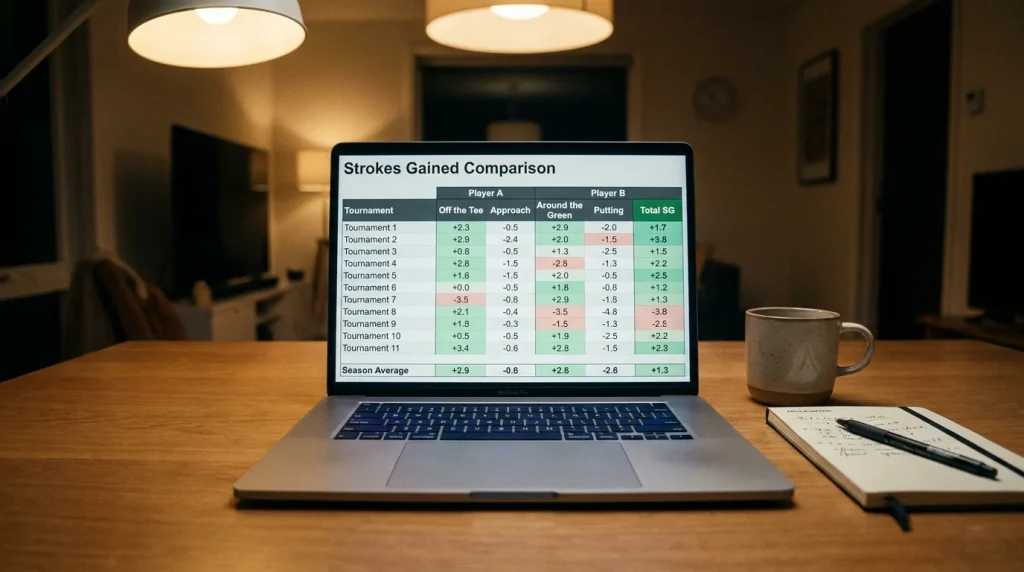
The first blind spot is form differential over the right time window. Bookmakers tend to weight recent results heavily, which means a player who finished second last week will be overpriced in matchups this week, while a player who missed two consecutive cuts but has strong underlying ball-striking numbers will be underpriced. I look at strokes gained tee-to-green over the last 24 rounds rather than finishing positions, because that metric strips out putting variance and gives me a cleaner read on which player is actually hitting the ball better.
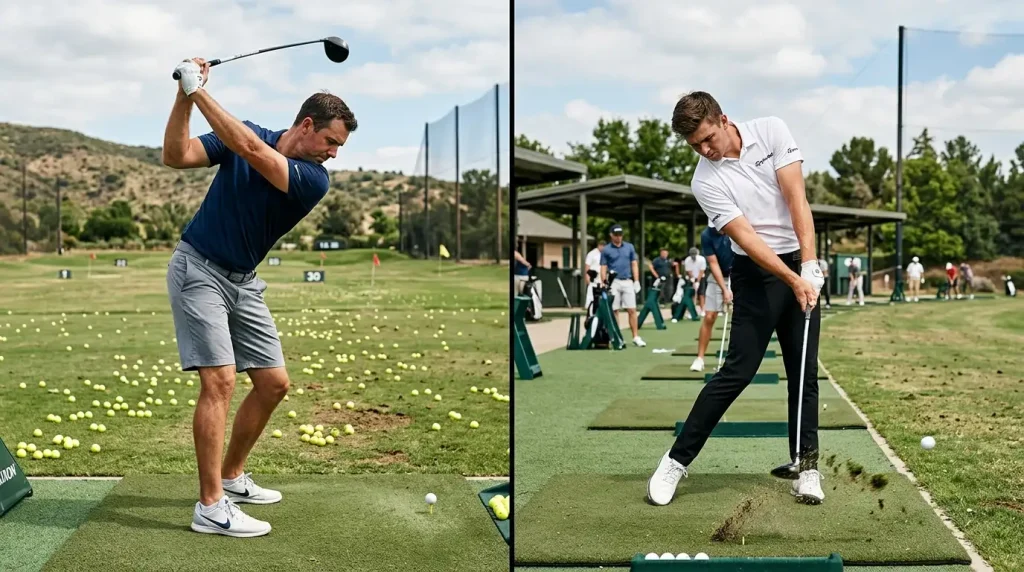
The second blind spot is course-specific form where sample sizes are small. If Player A has visited this course three times and finished 5th, 12th, and 8th, while Player B has never played it, the bookmaker’s model will favour Player A. But if Player B’s strokes gained profile is a near-perfect match for the course’s statistical demands, the model is probably wrong. Course history is a useful signal only when the sample exceeds four or five visits. Below that, it’s noise dressed up as information.
My weekly matchup workflow follows a consistent sequence: pull the strokes gained data for both players, compare their profiles against the course demands, check their round-one scoring tendencies (especially relevant for single-round 3-balls), and then verify the form window. Only after all four steps produce a clear lean do I check the odds. If the price confirms the lean, I bet. If it doesn’t, I move on to the next pairing.

One additional edge I’ve found in matchup pricing: bookmakers often fail to adjust for tee-time proximity. In a 72-hole matchup, both players will face different weather windows across four days. A player teeing off early on Thursday when conditions are calm has a structural advantage over their matchup opponent who faces afternoon wind — and that advantage reverses when the tee-time draw flips for round two. These short-term weather asymmetries rarely appear in the bookmaker’s pricing model, but they can shift the expected scoring differential by half a stroke per round. In a tight matchup, half a stroke per round over 72 holes is the difference between the bet working and not.
Dead Heats in 3-Ball Markets
Dead heats deserve their own section because they catch new matchup bettors off guard. In a 3-ball where two players tie, the payout on either tied player is halved — your stake is divided by the number of players sharing the lowest score before the calculation runs. So if you backed Player A at 6/4 and they tie with Player B, your effective stake is halved, and the return is calculated on that reduced figure. A winning bet suddenly feels like a quarter-win.
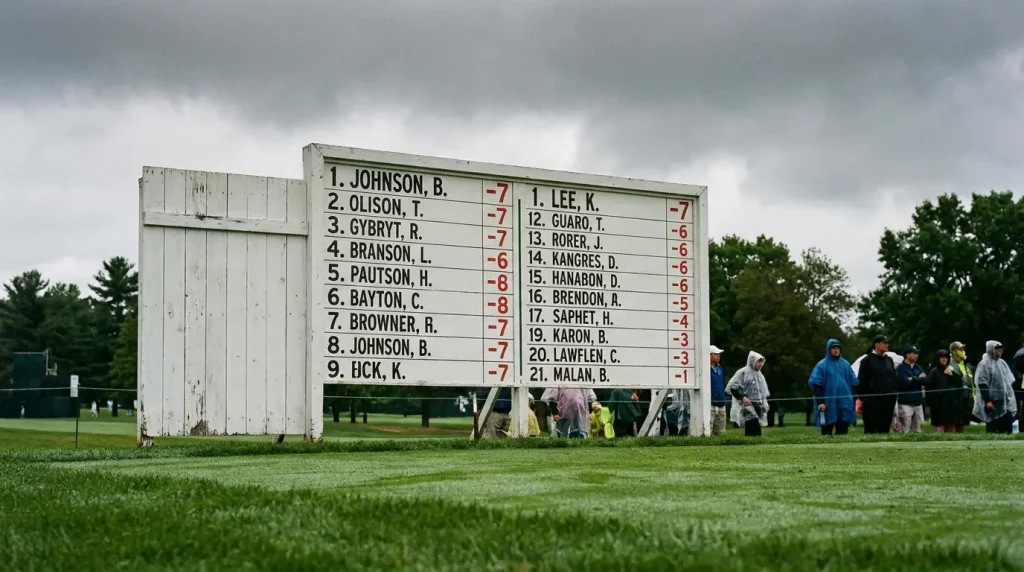
The frequency of dead heats in 3-balls means you need to price them into your expected value calculations. I typically discount the posted odds on 3-ball bets by 8-12% to account for dead heat probability before deciding whether the value threshold is met. If a dead heat scenario turns a marginally positive expected value into a negative one, I skip the bet entirely. The 72-hole matchup format sidesteps this problem almost entirely — ties over four rounds are rare enough to be negligible.
Golf Matchup Betting: Common Questions
What are 3-ball and 2-ball betting in golf?
A 2-ball bet matches two golfers head-to-head over either a single round or the full 72-hole tournament. You pick which player will post the lower score. A 3-ball bet covers three players grouped by their actual tee time for one round. You pick which of the three will score lowest. The main structural difference is dead heat risk — ties are more common in 3-balls because three players scoring identically over 18 holes is more likely than two players tying over 72.
How do I compare two golfers for a head-to-head bet?
Start with strokes gained tee-to-green over the last 24 rounds to assess ball-striking quality. Then compare each player"s statistical profile against the specific course demands — driving accuracy at tight courses, approach play at layouts with small greens, scrambling at venues with complex short-game areas. Check round-one scoring tendencies for single-round matchups. Only after the data produces a clear lean should you check the price to confirm value.
Articles
Published by the Golf Betting Tips team.
