
First Round Leader Betting in Golf: How to Assess the FRL Market Before Thursday Tee-Off
 Available in US

Three years ago I hit a 90/1 first round leader bet at the RSM Classic. The player wasn’t a household name — he was a steady ball-striker who’d been quietly posting low opening rounds on coastal courses all autumn. That single bet paid more than my entire outright portfolio for the month. It also taught me that the FRL market rewards a completely different analytical process from tournament winner betting, and most punters never bother to learn the difference.
The PGA Tour recorded a 20% increase in golf betting handle in 2025, and a meaningful chunk of that growth came from round-specific markets. First round leader betting strips the tournament down to a single 18-hole sprint, which changes every variable — form windows shrink, tee-time draws become decisive, and players who peak early but fade over 72 holes suddenly become valuable assets rather than frustrating picks. If you’ve been ignoring the FRL market, you’ve been walking past edge that the outright crowd never sees.
What a First Round Leader Bet Covers
I get asked this surprisingly often, so let me be precise. A first round leader bet is a wager on which player will hold the outright lead after Thursday’s opening round. Not tied for the lead — the outright leader. If two or more players share the lowest score, dead heat rules apply, which means your stake gets divided by the number of players sharing that position before the payout is calculated. In a field of 156 players, multiple ties for the lead are common, so dead heat exposure is a structural feature of this market, not an edge case.
The pricing structure mirrors outright markets in one important way: long odds across the board. Even the tournament favourite might be priced at 16/1 or 20/1 for first round leader, because predicting who’ll post the lowest score over a single round is inherently volatile. Putting — the most unpredictable element of golf performance — carries outsized influence over 18 holes. A player who holes a couple of long putts early can separate from the field in a way that rarely happens when you average performance over four rounds.
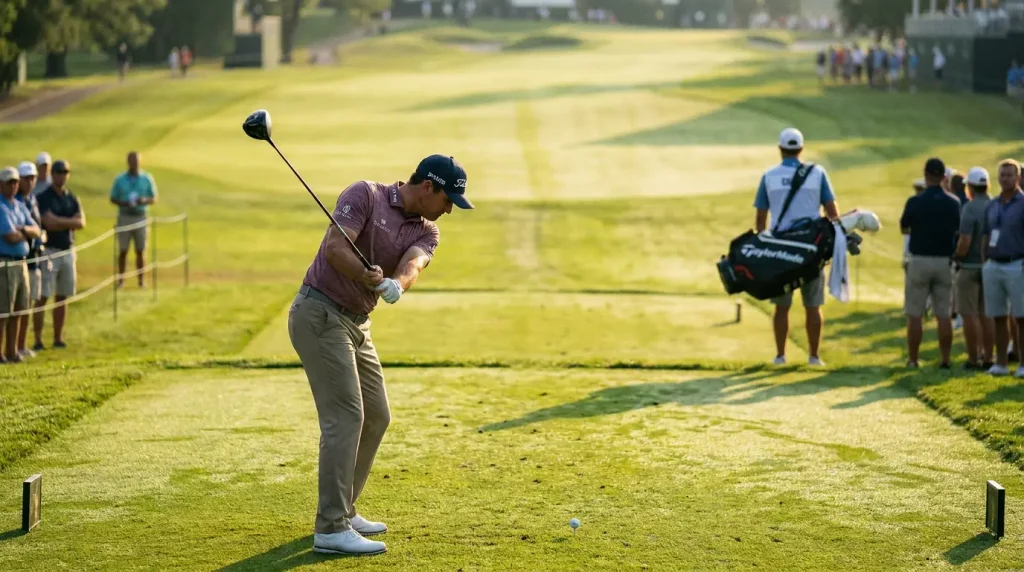
What makes FRL distinct is the timeline. Your bet settles on Thursday evening. There’s no waiting through four days of fluctuating leaderboards, no hoping your player recovers from a bad second round. That compressed timeframe changes the psychological experience of the bet and, more importantly, it changes which statistical indicators actually predict the outcome.
Stats That Predict Round-One Performance
I spent a full season tracking which statistics correlated most strongly with first round scoring, and the results surprised me. Overall strokes gained tee-to-green — the metric I rely on heavily for outright betting — was less predictive for single-round performance than I expected. What mattered more was a combination of opening-round scoring average, birdie-or-better percentage, and bogey avoidance in the first six holes of a round.
The logic is straightforward once you think about it. FRL isn’t about who plays the best golf over 72 holes. It’s about who plays the best golf in a single concentrated session, often under different psychological conditions than later rounds. Some players are slow starters who need a round to find their rhythm. Others come out firing, post a 64 on Thursday, and spend the next three days grinding to hold position. The FedEx Cup Playoff events in 2025 saw betting handle rise 50% year-on-year, and that influx of money has sharpened FRL pricing at major events — but at regular tour stops, the market remains softer than you’d expect.

My shortlisting process for FRL bets starts with three filters. First, I pull each player’s average first-round score relative to the field over their last 12-15 tournaments. A player who consistently scores 1.5 strokes better than the field in round one is a fundamentally different proposition from someone whose scoring is evenly distributed across all four rounds. Second, I check birdie-or-better percentage in rounds one specifically — some players attack early before the course firms up or the wind picks up. Third, I look at bogey avoidance on the opening stretch of holes, because a double bogey on the second hole effectively eliminates you from FRL contention regardless of what happens afterwards.
Morning vs Afternoon Tee Times and Their Impact
This is where FRL betting gets genuinely interesting, and where most casual punters leave significant edge on the table. At a typical Thursday tee-off, half the field plays in the morning wave and half in the afternoon. The scoring differential between waves can be enormous — two, three, even four strokes on a day where wind picks up after lunch or rain softens the course for early starters.
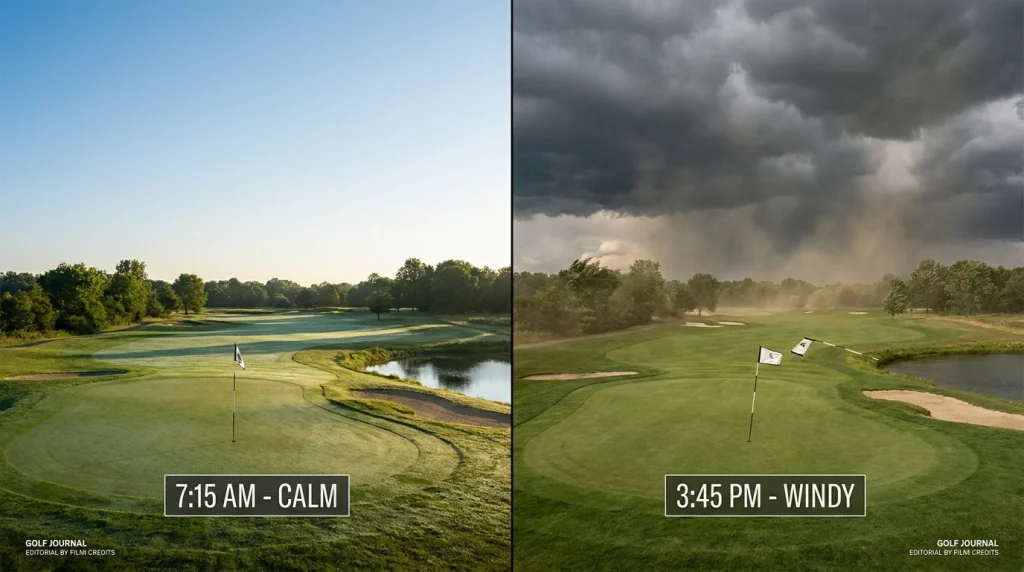
I always check the weather forecast before placing an FRL bet, and I’m not talking about a casual glance at whether it’ll rain. I want hourly wind speed and direction, temperature changes through the day, and the probability of precipitation shifting between morning and afternoon. At links courses, the difference between a calm morning and a 25 mph afternoon breeze is the difference between a 65 and a 70 from players of identical skill level. My guide to weather’s impact on golf betting covers the tools and techniques for this analysis in detail.

The draw advantage doesn’t just affect who wins the FRL market — it affects the price you should be willing to pay. If the forecast strongly favours the morning wave, the FRL market effectively shrinks from 156 players to roughly 78 realistic contenders, which means each morning player’s true probability doubles relative to the posted odds. Bookmakers adjust for this to some degree, but in my experience they consistently underweight draw advantage, particularly at events outside the signature series where pricing gets less attention.
Finding FRL Value in Fields of 156 Players
Here’s the part that took me longest to internalise: you don’t need to find the player who will lead after round one. You need to find players whose true probability of leading exceeds the probability implied by their odds. In a 156-player field, even a player with a 3% chance of being first round leader can represent excellent value if the bookmaker is pricing them at 1.5%.

My approach is to build a probability estimate for each player on my shortlist — based on the statistical filters I mentioned above, adjusted for draw position and course-specific factors — and then compare those estimates against the bookmaker’s implied probabilities. I typically find three to five genuine value plays per tournament, and I’ll back all of them at small stakes rather than putting the full allocation on a single pick. The variance in a 156-player single-round market is too high for concentrated betting. Spreading across multiple selections with positive expected value is the only approach that produces sustainable results over a full season.
One tactical note: FRL odds tend to move less aggressively than outright odds in the days before a tournament. Bookmakers focus their pricing energy on the outright and top-finish markets, which means FRL prices can sit at soft levels until late Wednesday. I place my FRL bets as late as possible — ideally after the draw is published and the weather forecast solidifies — because those two pieces of information are worth more than any amount of form analysis for this specific market.
FRL Golf Betting: Common Questions
What is a first round leader bet and when should I use it?
A first round leader bet is a wager on which player will hold the outright lead after the opening round of a golf tournament. It settles on Thursday evening, making it a single-day market. Use it when you have identified players with strong opening-round scoring histories, favourable tee-time draws, or course conditions that suit their games on day one specifically. FRL is most valuable when weather or draw splits create a clear advantage for one wave over the other.
Are first round leader odds better value than outright winner odds?
They can be, because bookmakers dedicate less pricing resource to the FRL market than to outrights. The FRL market also allows you to exploit variables that don"t affect outright betting as strongly — particularly tee-time draws and weather conditions. However, dead heats are more common in FRL than in outright markets, so factor that into your expected return calculations.
Articles
Published by the Golf Betting Tips team.
