Golf Prop Bets Explained: Specials, Hole-in-One Markets and Novelty Wagers
 Available in US

I once placed a hole-in-one bet at the Masters because the odds looked “generous” and a colleague assured me it was “basically free money.” The bet lost — there was no hole-in-one that year at the nominated hole — and when I later calculated the true probability against the offered price, I discovered the bookmaker’s margin on that market was over 40%. That experience cured me of casual prop betting permanently. Props can be profitable, but only when you treat them with the same analytical rigour you’d apply to any other market. Most punters don’t, which is why most punters lose on props.
The PGA Tour LIVE Betcast expanded from 50 hours across 6 tournaments to over 400 hours across 12 in 2026, and that coverage explosion has dramatically increased the number of prop markets available during live play. Bookmakers now offer hole-by-hole scoring, next-birdie props, approach-shot proximity bets, and scoring segment markets that didn’t exist two years ago. More markets mean more opportunity — and more traps for the unwary.
Common Golf Prop Markets on UK Sportsbooks
Prop markets — short for proposition bets — are wagers on specific outcomes within a tournament that don’t involve picking the overall winner. Sportradar’s golf data feeds power the prop infrastructure at most UK bookmakers, delivering the scoring and shot data that makes granular markets possible. The most common prop types I encounter each week fall into several categories.
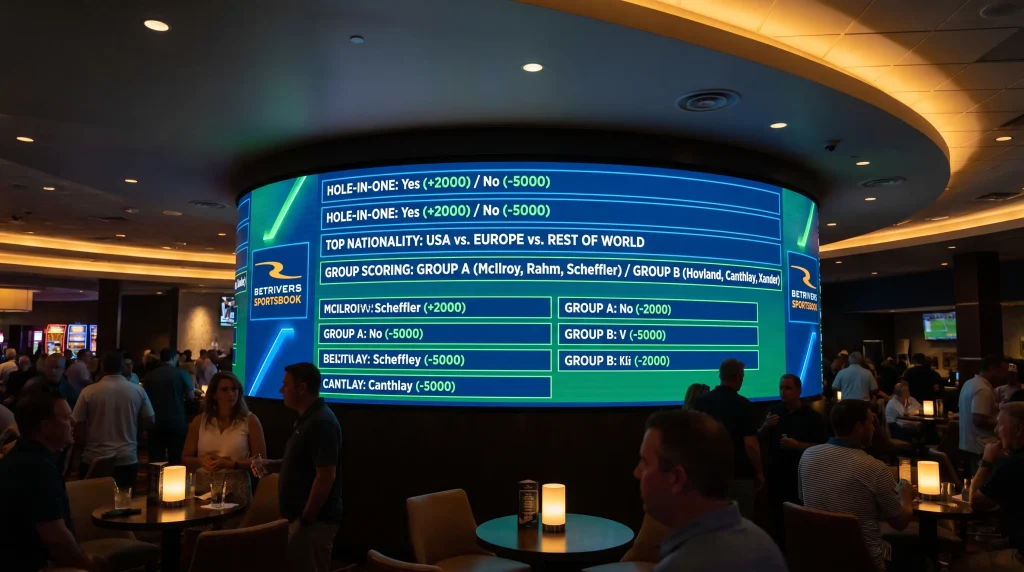
Scoring props cover outcomes like the winning score (over/under a specified total), the first-round leader’s score, whether any player will shoot 59 or lower, and round-by-round scoring for named players. These are data-friendly markets because you can model expected scoring using course history, field strength, and weather conditions.
Player-specific props include make/miss cut, top nationality, top left-hander, top rookie, and player-vs-field scoring matchups. The analytical depth varies: make/miss cut is highly modellable using cut-line prediction models, while “top left-hander” is essentially a mini outright market among a subset of the field.
Novelty props include hole-in-one (yes/no for the tournament or for a specific par-3), whether there will be a play-off, and occasionally celebrity-adjacent bets during pro-am rounds. These carry the widest margins and the least analytical basis.
Where Props Offer More Edge Than Main Markets
The paradox of prop betting is that the markets with the worst margins also offer the largest edges — if you have the right data. Bookmakers set outright and top-finish prices using sophisticated models fed by comprehensive datasets. Props, by contrast, are often priced by a single trader using simpler models, and the volume of markets during a major week (200+) means individual prices receive less scrutiny.
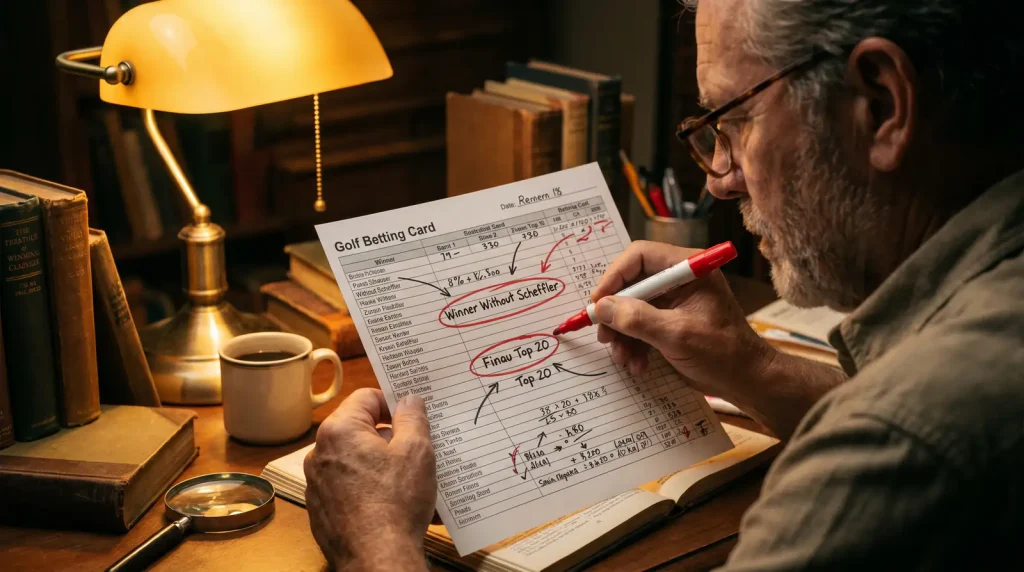
My most profitable prop category is make/miss cut. The data requirements align perfectly with my existing analytical process: I already calculate each player’s expected scoring average for the week, and converting that into a cut-line probability is a straightforward extension. The bookmaker’s cut-line pricing tends to be anchored to the player’s outright odds, which creates mispricings when a player is correctly priced for the outright but incorrectly priced for the cut. A player at 100/1 for the outright — low win probability — might still have an 80% chance of making the cut if their scoring profile is consistent but unspectacular.
Nationality props also offer occasional value, particularly at the Open Championship and the Masters where the matchup structure between specific national groups is well-defined. If the top European players include three genuine contenders and the bookmaker’s “top European” price implies only two are in the mix, there’s a quantifiable edge.
Scoring props — over/under on the winning total, or over/under on a specific player’s round score — are another area where independent analysis can expose soft pricing. Most scoring-prop models are anchored to the course’s historical scoring average, but they under-weight weather conditions, course setup changes and field strength. A week where wind forecasts suggest significantly harder conditions than the historical average can push the winning score comfortably over the bookmaker’s line, and I’ve had a positive ROI on “over” bets on winning-score props during high-wind weeks across three seasons of tracking. The analytical process is simple: compare the bookmaker’s line to your weather-adjusted scoring model and bet the direction where the gap is widest.
In-play props — next birdie, next bogey, hole-by-hole scoring for featured players — are the newest frontier and the market where bookmakers are still learning how to price. The Betcast expansion to 400+ hours of coverage in 2026 has enabled these granular in-play markets, and the speed of the market means prices can be reactive rather than predictive. A player who’s just birdied three of the last four holes might be underpriced for “next birdie” because the market hasn’t fully adjusted to their hot streak. Conversely, a player struggling on the greens might be overpriced for “bogey on next hole” because the market is slow to penalise putting slumps. These edges are real but fleeting — you need live coverage and fast execution to capture them.
Novelty Bets That Look Fun but Carry Poor Value
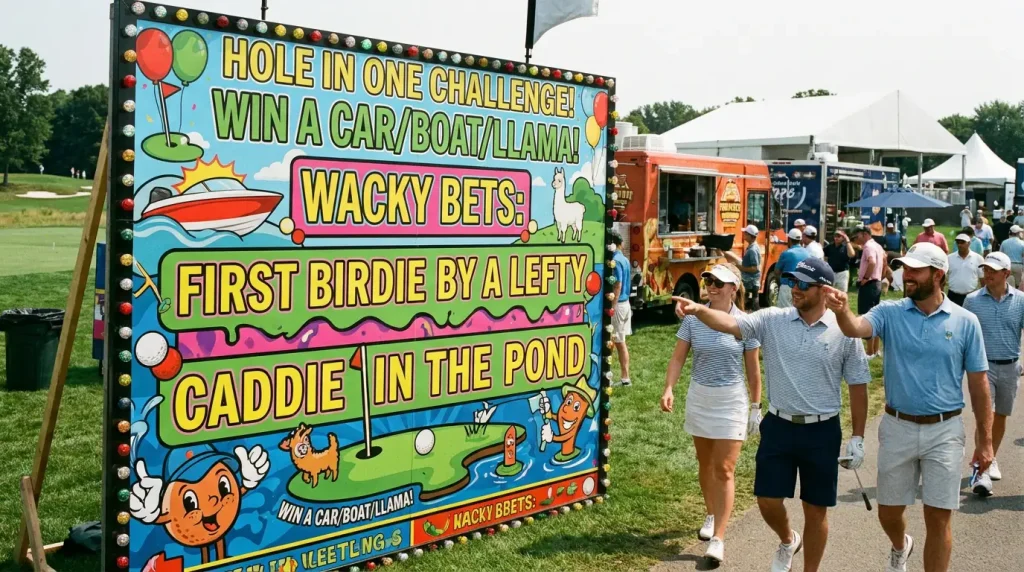
I want to be specific about which props I avoid, because the entertainment appeal of novelty bets disguises their mathematical hostility. As one veteran analyst put it to me bluntly: “Novelty golf bets are the bookmaker’s dessert menu — high margin, low substance, and designed to make you feel like you’re having fun while the house takes your money.” That framing has stuck with me.
Hole-in-one bets are the prime example. The probability of any player making a hole-in-one on a given par-3 in a professional tournament is roughly 1 in 2,500 shots. Across four rounds with 156 players and four par-3s, a full-field event produces roughly 2,500 par-3 attempts, giving a tournament-wide probability of approximately 60-65% that at least one hole-in-one occurs. Bookmakers price “yes” on a hole-in-one at odds implying roughly 50-55% probability, which looks like value until you realise the uncertainty band around the true probability is wide and the bookmaker has it covered. The margin is baked into the uncertainty, not the headline price.
Play-off bets carry similar issues. The historical frequency of play-offs on the PGA Tour is roughly 8-10% of events, but the distribution is uneven — some courses and field compositions produce play-offs far more often than others. Unless you’ve built a course-specific play-off model (and I haven’t found one that adds value), these bets are pure entertainment.
Golf Prop Bets: Common Questions
What are the most common golf prop bets in the UK?
The most widely offered golf props on UK sportsbooks include make/miss cut, top nationality (top American, top European), tournament winning score over/under, first round leader score, hole-in-one yes/no, and whether there will be a play-off. During major championships, the prop menu expands to include player-specific scoring props, group bets, and hole-by-hole markets during live Betcast coverage.
Is a hole-in-one bet good value at a major?
Rarely. Hole-in-one bets at majors attract heavy recreational money, which allows bookmakers to set wide margins — often exceeding 30-40%. The true probability of at least one hole-in-one occurring during a major is approximately 60-65%, but the pricing typically implies 50-55%, with the gap representing the house edge. Unless you can identify a specific par-3 where the pin position and player skills create a probability significantly above the market"s implied figure, these bets carry poor expected value.
Articles
Created by the "Golf Betting Tips" editorial team.
